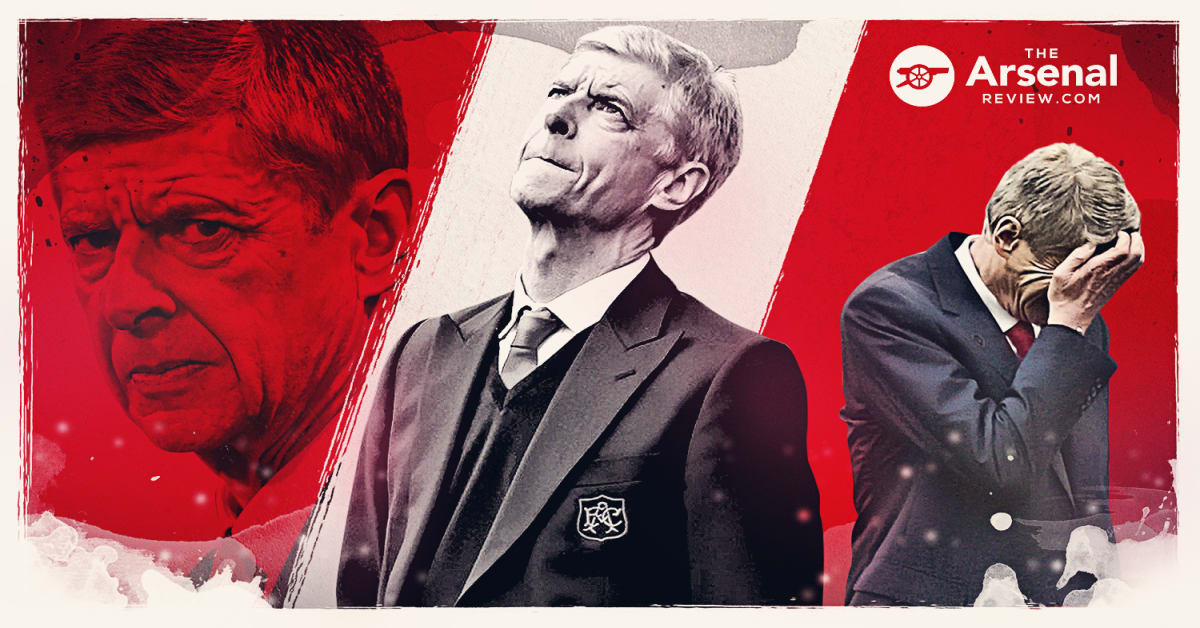
Everyone knows the story of Arsene Wenger at Arsenal. A Frenchman who arrived from Japan was doubted by everyone and quickly shut them up. A man who’s influence on not just Arsenal, but English football, is vividly present to this day.
Wenger won everything there is to win in English football. His record speaks for itself; three Premier Leagues and seven FA Cups. He turned the game on its head, made attacking, free-flowing football cool and changed the perception of foreign managers in England massively.
However, towards the latter stages of his twenty-two-year stint at the club, the Frenchman’s reputation took a hit. Arsenal faded from a constant title challenger to a regular sight in the top four, to also-rans in the race for those four coveted Champions League spots. But how exactly did the 70-year-old experience such a fall from grace?
For me, Wenger’s time at Arsenal can be split into two sections; pre and post the move to the Emirates.
Pre the move to the Emirates, Arsenal were a winning machine. Arsenal would always be challenging for the league and only finished outside the top three once under Wenger. The Frenchman was able to revolutionise English football, and duly won the league in his second season.
From there, Arsenal ended up finishing second for three seasons running before winning the league in 2001/02. A Silvan Wiltord winner against Manchester United at Old Trafford on the penultimate game of the season was enough for Wenger’s charges to win the league by seven points.
A second-place finish the following season then led to what is arguably the Frenchman’s greatest achievement at the club, as Arsenal famously won the league in the 2003/04 season without losing a single game.
Following that was a second-place finish behind Jose Mourinho’s incredible Chelsea team and a fourth-place finish in 05/06 – the club’s final season at Highbury. However, this was overshadowed by Arsenal reaching the Champions League final, where they lost 2-1 to Barcelona in Paris thanks to an eightieth-minute winner from Juliano Belletti.
One of Wenger’s biggest strengths was his ability to find and develop young players at bargain prices. Examples of this include Thierry Henry £11 million, Patrick Vieira for £3.5 million, Freddie Ljungberg for £3 million and Robert Pires for £7 million. All four players would go on to be key parts of Wenger’s Invincibles side.
However, something changed in the summer of 2006. Arsenal moved from their spiritual home of Highbury to the brand new Emirates Stadium. From a business standpoint, the move made sense. The Emirates has a capacity nearly twice the size of Highbury’s and has state of the art facilities. It was supposed to help Arsenal keep up the pace with Europe’s elite clubs. Footballing wise, however, something was missing. While Wenger was prevalent in the design process, nothing could replace Highbury. It was iconic. It was home.
The move to the Emirates posed other challenges. While revenue went up 107% following the move, the club was around £500 million in debt. That number has gone down since, of course, but is still very high.
That amount of debt meant that money for transfers dried up. From 2006 to 2011, Arsenal only spent more than £20 million once. In that period, players such as Marouane Chamakh, Sebastian Squillaci and Andrey Arshavin were all drafted in. Arsenal slowly became a selling club.
In order to generate more funds, the club had to let their best players leave the club. Players such as Ashley Cole, prodigal son Thierry Henry, Emmanuel Adebayor, Cesc Fabregas, Samir and Robin Van Persie were all allowed the club. This meant that Arsenal slowly became less competitive.
By this period, clubs such as Chelsea and Manchester City broke the duopoly of Manchester United and Arsenal. These clubs crucially had something that Arsenal and Wenger didn’t; financial backing from billionaire owners. This allowed these new powers to pull away from Arsenal.
2011 was the start of what Arsenal fans have come to call the “banter era.” This was a period where Arsenal was continuously mocked on social media. This started when Arsenal lost to Birmingham in the 2011 League Cup Final. However, the banter truly after Arsenal’s 8-2 loss to former rival Manchester United in a game where Wenger was forced to pick a bunch of youngsters, plus the defensive headaches of Johan Djourou, Carl Jenkinson and Armand Traore. Arsenal are now only seeming to exit their “banter era” stage.
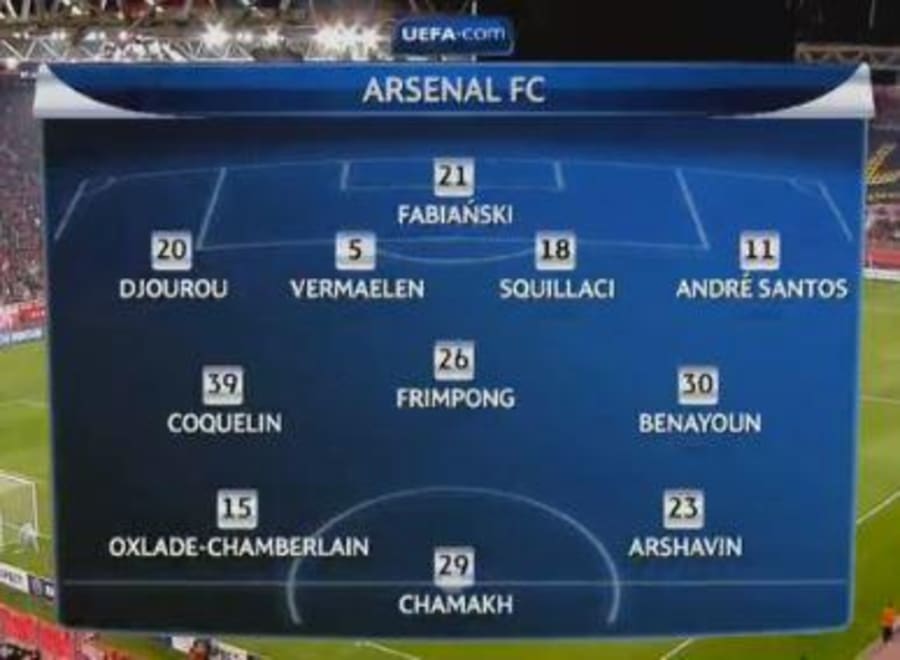
Wenger’s problem was that he was not backed in the transfer. Stan Kroenke was in charge now and intended to run the club on a self-sufficient model. As a result, Arsenal’s greatest ever manager was forced to put this side out for a Champions League group-stage game against Olympiacos.
As more and more money was spent, Arsenal continued to fall out and out of the title race. That’s represented in Arsenal’s final positions following the move to the Emirates. Whereas Arsenal only finished outside the top two once under Wenger at Highbury, the Emirates has seen only one second-place finish since it’s completion.
It hasn’t been much prettier in the Champions League either. Arsenal famously haven’t made it past the last sixteen of Europe’s premier competitions in their last seven attempts. This a far cry from the rollicking ride of 2005/06.
Towards the latter stages of Wenger’s reign, there was renewed hope and optimism. The club had signed Mesut Ozil, Alexis Sanchez and Petr Cech. They finished third in the 2014/15 season, four points off second. To go with that, the won the FA Cup for the second time running, Wenger’s sixth in total. Sanchez banged in his first season, with sixteen goals.
The following season, however, was an improvement. Wenger managed his first finish inside the top two since 2005, Ozil was at his creative best. While Arsenal did finish ten points off top spot in a season where most of the big sides underperformed, many Gooners felt that if they had a striker with better finishing than Olivier Giroud, the title would have been back in North London for the first time since 2004.
The 16/17 season was the time to kick on. To build and seriously go for the title. However, the annual mid-season title collapse struck again with Arsenal top of the table in November. As the big sides strengthened massively, mostly in managerial quality, Arsenal stagnated. The gap between Wenger’s genius and the money being spent was too big. Arsenal finished outside of the top four for the first time under the Frenchman. They did win a record thirteenth FA Cup, however, a small consolation.
As the #WengerOut campaign continued to gain traction online, Arsenal started the 17/18 campaign in dire form with a 4-0 loss to Liverpool in their third game. From there, things went from bad to worse as Arsenal finished sixth in the league, something unthinkable when Wenger took over. When the club’s most decorated manager announced his departure from the club, he did so without a single European trophy, going out in the Europa League semi-finals to Atletico Madrid in a heartbreaking manner. This wasn’t how it was supposed to end.
For me, the biggest reason for Wenger’s decline was money. Kroenke refused to invest in the club, and as a result, the club stagnated while their competitors improved. It got to the point where the Frenchman alone wasn’t enough to keep the club punching above their weight. Wenger, at least in my opinion, became a Pochettino-type manager; someone who managed to get a group of players overperforming on a relatively small budget. That’s a steep decline from the world-beater of the early 2000s, and it’s all down to the board.