At the time of writing this, Arsenal sit 9th in the league table and have drawn Slavia Prague at home in the first leg of Europa League quarter-final, a competition which is their only hope remaining to get a shot at qualifying for Champions League next year. Whilst the majority of Arsenal fans still have faith in the man in charge, Mikel Arteta and the overall long term process he is leading – there are a large growing section of fans who are rapidly losing trust in his leadership abilities and rightly so, since finishing mid-table was the last thing any Arsenal fan expected at the start of the season – all the more so when you consider the whole wave of optimism that was brought in by the FA Cup victory and new exciting signings such as Thomas Partey and Gabriel (It’s the hope that kills you as an Arsenal fan….).
While a lot of things haven’t turned out the way they were expected to under Mikel Arteta, there still have been a lot of things from a tactical standpoint which Arteta has got right consistently. We believe that pressing and off-the-ball shape, in general, is one of them and hence I will be taking a detailed look at the various different pressing structures implemented by Arteta so far at Arsenal from a tactical viewpoint backed by some important statistics and data visualizations.
Time-lapse 1: Arteta appointed and the 4-4-2 pressing shape:
With a horrid start to the season under Unai Emery (which also led to his sacking) and the subsequent underperformance under interim manager, Freddie Ljungberg, Arsenal found themselves in a highly chaotic situation in the middle of the season and was in search of some much-needed stability and entrusted Mikel Arteta with the job. Arteta came in and implemented his ideas which were clearly inspired by his mentor Pep Guardiola: a 2-3-5/3-2-5 shape in possession and a 4-4-1-1/4-4-2 pressing shape based on wide pressing traps out of possession. Arsenal saw an improvement on both fronts.
While the zonal 4-4-2/4-4-1-1 pressing shape was nothing new and was being implemented by former head coach Unai Emery himself, the difference lied in the implementation. Also, another key factor was the constant changing of formations/shapes (especially at the end of his tenure) under Emery which meant that Arsenal never had a settled pressing shape.
It was clear from the first game under Arteta itself that the focus was on covering space/blocking passing lanes and forcing the opposition out wide before collapsing on the opposition wide player.
The shape resembled a 4-4-2/4-4-1-1 with no.10, Ozil joining Lacazette (ST) in the first line of press. Usually, Ozil started deep, marking the opposite pivot before moving to press the opposition CB. Wingers also stayed a bit narrow initially, before acting on the trigger to press the opposition fullback/wingback on their reception. The role of the double pivot was flexible which meant that their duties alternated between man-marking and staying deep protecting space between the lines/covering passing lanes:
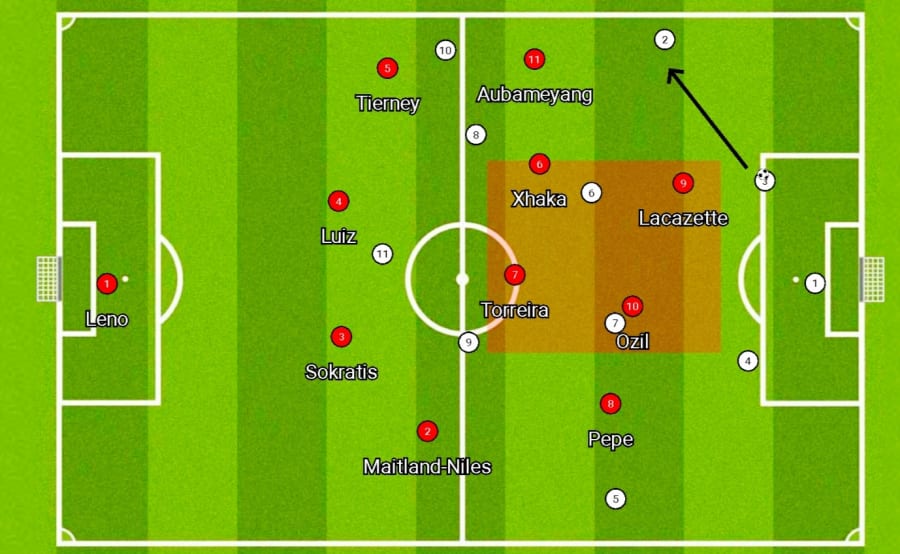
The above-mentioned points were very well visible against their home game against Manchester United, which, till date remains one of the best performances under the Arteta regime.
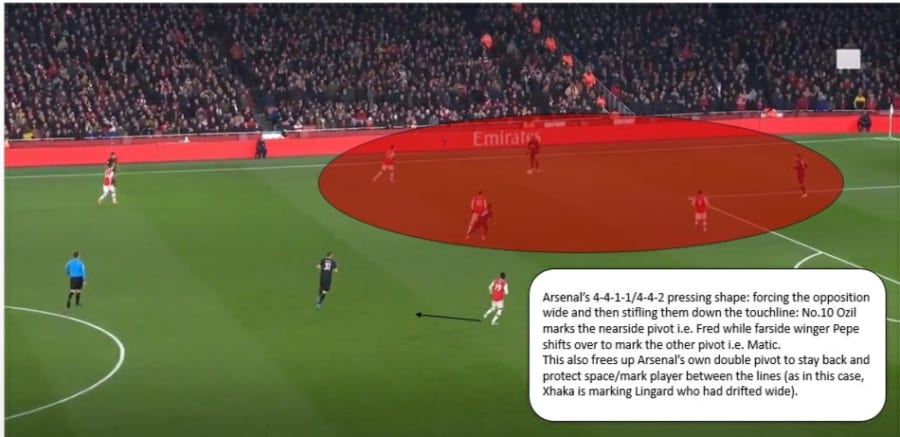
Here is one in-game example where Arsenal are able to successfully force United towards the touchline before collapsing in on Wan-Bissaka (RB).
And another example showing the flexible role of the double pivot (Xhaka in this case).
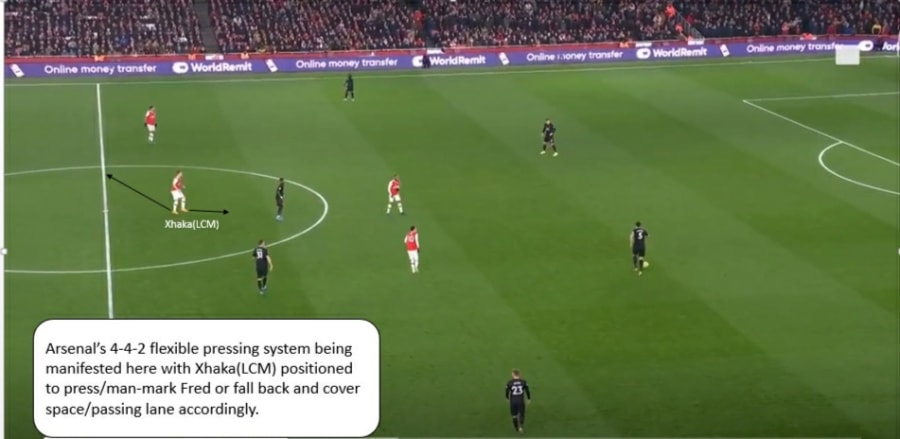
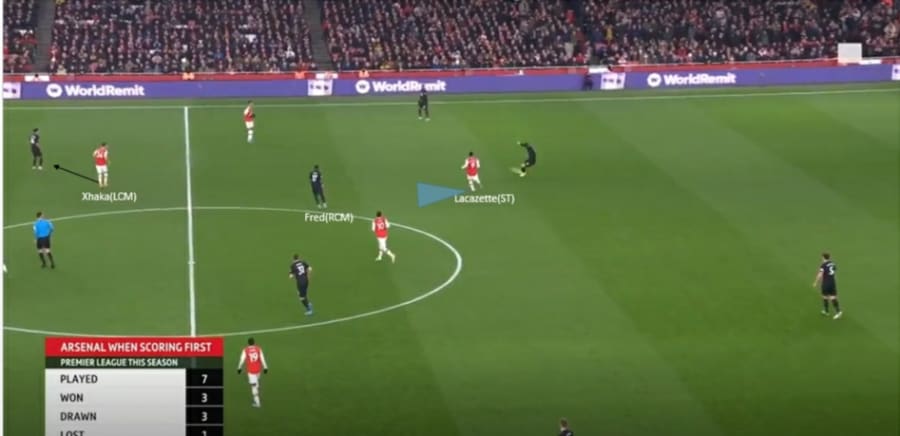
This flexibility meant that the double pivot never got dragged out of position which could have happened if in case they were given strict man-marking duties (which was the case under the 3-4-3 which will be thoroughly explained in the next section).
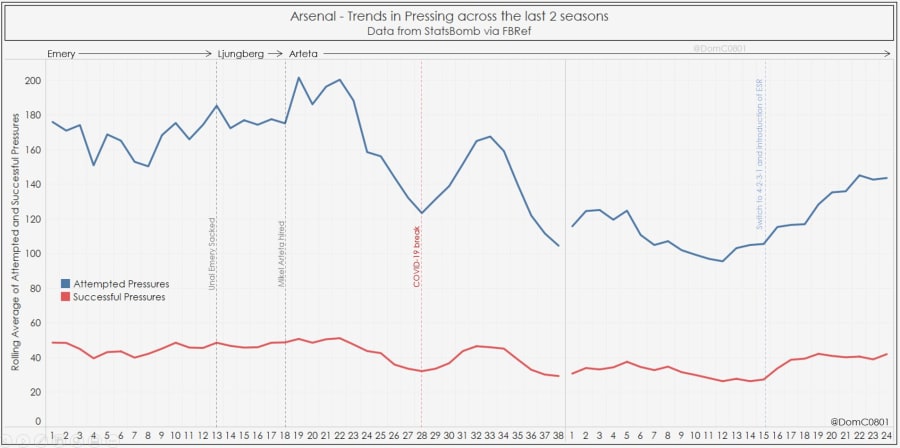
Under this system, Arsenal focused more on efficiency and covering space instead of aggressive pressing, which under the given circumstances was the right choice and gave Arsenal the much-needed stability. This can also be seen through the visualization below which showcases Arsenal low pressures in the final third but the majority of them occurring in the middle-third.
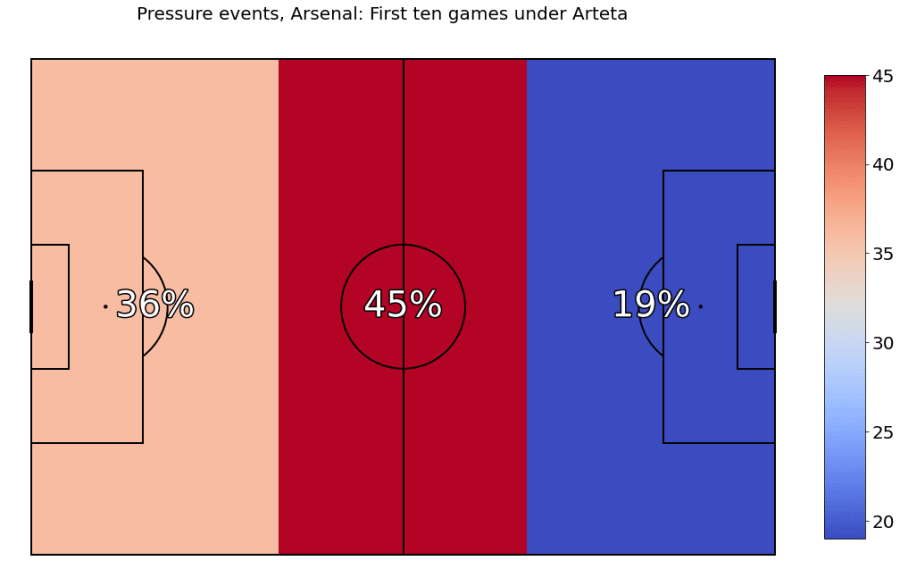
Time-lapse 2: Change to a 3-4-3 system post-lockdown overall and a change to a 3-4-1-2 man-oriented pressing shape (June 2020 – Dec 2020)
Post-lockdown, Arteta decided to change to a 3-4-3 to bring in new ideas in possession which automatically also meant that he had to bring in a new pressing shape. This new pressing scheme was a lot more aggressive and had rigid man-oriented instructions for all the players, in complete contrast to the zonal setup previously.
The structure was as follows:
-
Somewhat similar to Liverpool, Arsenal also had a narrow pressing shape with striker dropping deep to mark the opposition pivot while the wingers are positioned high and narrow to press the opposition center-backs.
-
The rest of the team is man-oriented as well with the double pivot marking the opposition double pivot, wingbacks pressing the opposition fullbacks/wingbacks, and so forth and so on.
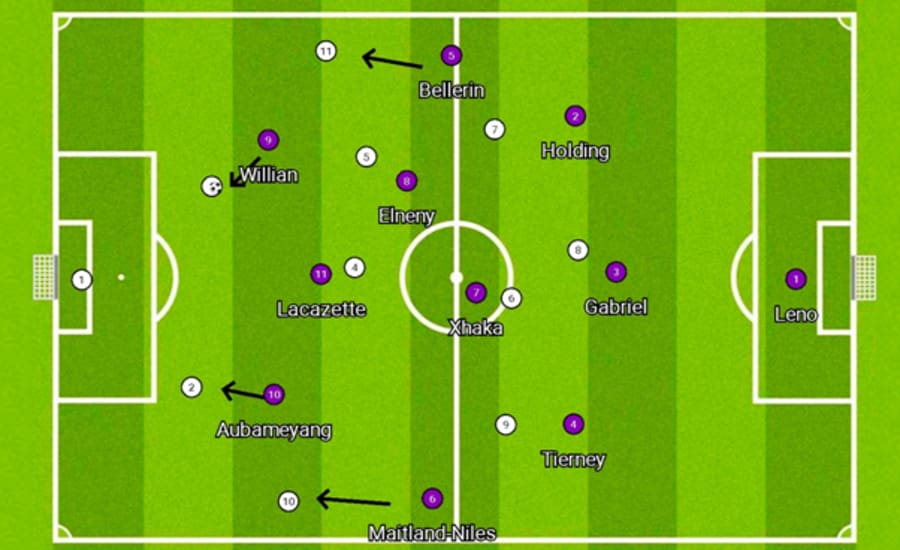
This change in shape reaped some rewards initially for Arsenal, especially in their 2-1 win against Liverpool in which both the goals were scored as a result of Arsenal’s high press.
Man-oriented pressing has got no tactical complications as such since the very nature of it reduces the tactical battle to a 1v1 individual battle. The obvious advantage when pressing high in a man-oriented setup is the immediate restriction of space for the opponent which prevents them the time to think and execute their actions/patterns.
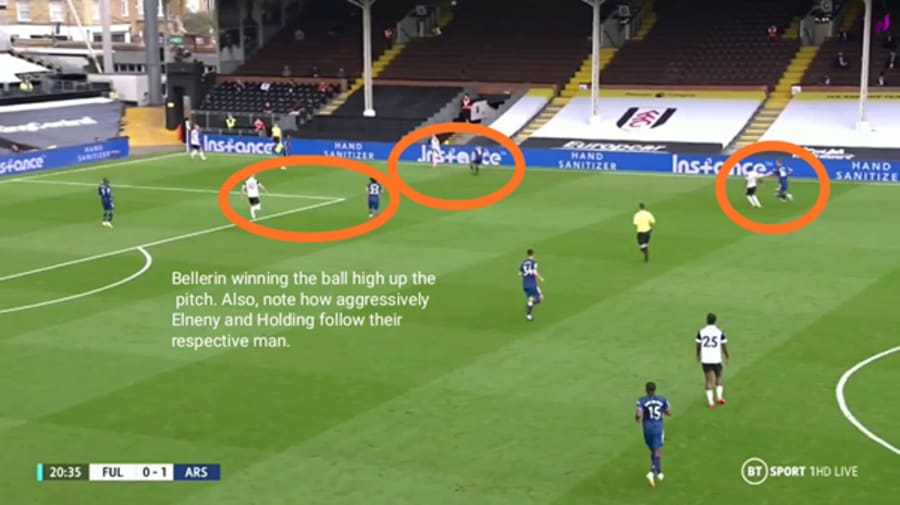
But implementing such a risky system can prove costly too, as it did for Arsenal and Arteta in their extremely poor run at the start of the 20/21 season against sides like Liverpool, Manchester City and Aston Villa.
Aston Villa exploited the setup by going direct and winning their individual duels by utilizing the quality of Watkins, Grealish etc. Liverpool did something similar by utilizing Van Dijk’s long-range passing and going direct to Salah and isolating him in a 1v1 duel with Tierney.
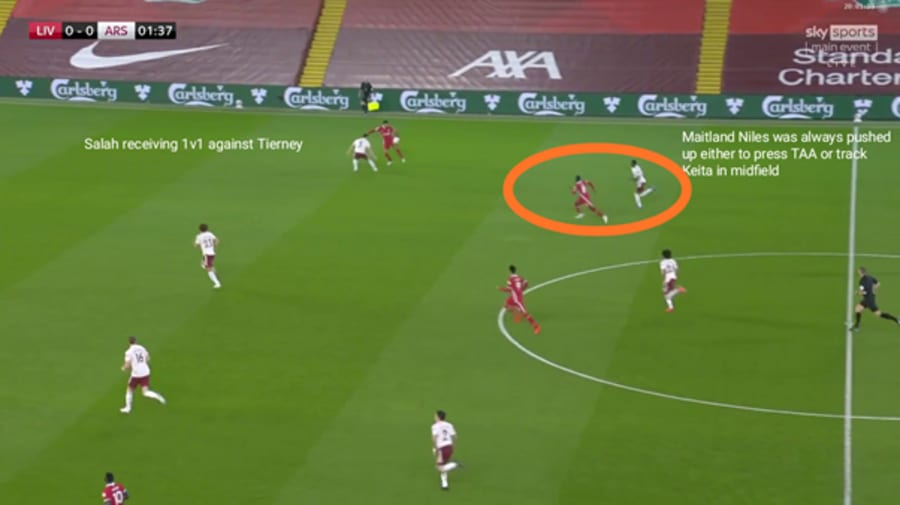
Liverpool and Manchester City also exploited the space between the lines by baiting the Arsenal’s double pivot into pressing thus leaving space in between the lines for the false 9 to drop into.
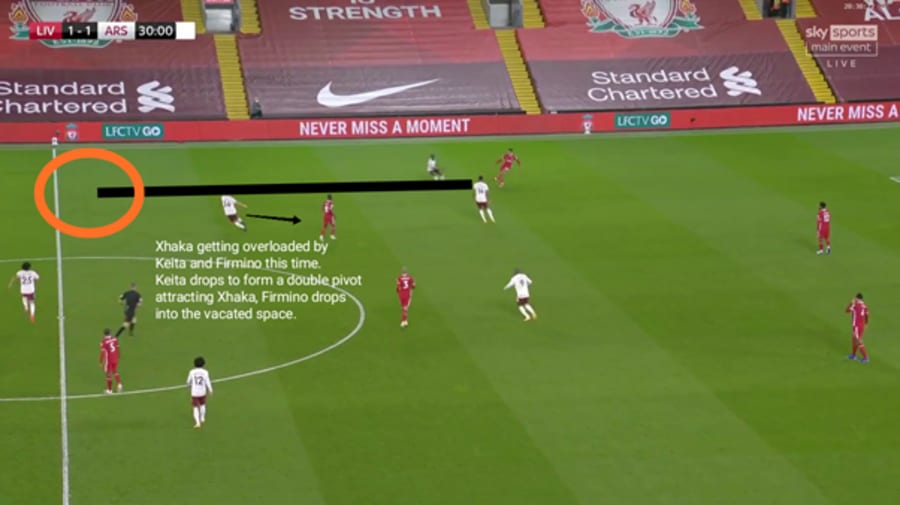
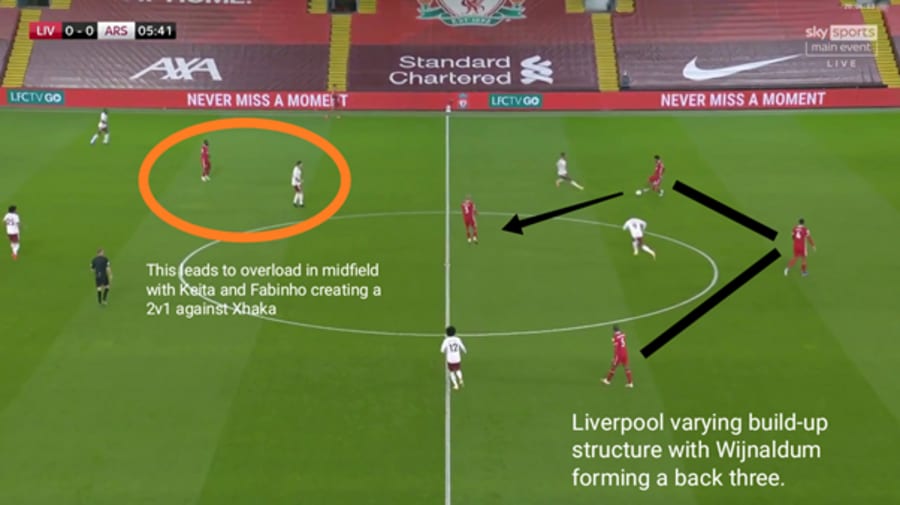
City did something similar by using Aguero and Sterling to exploit space between the lines.
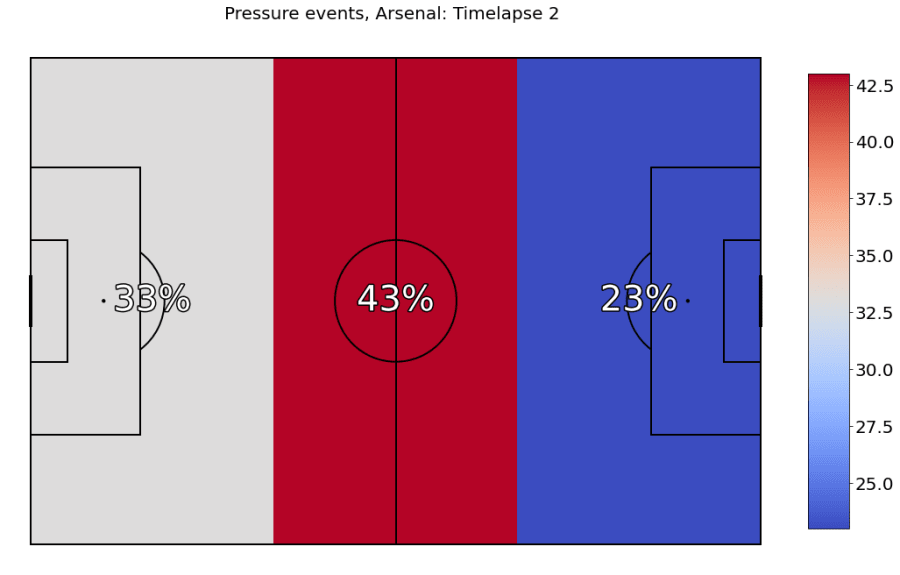
All the above shows the high risk high reward nature of man-oriented pressing schemes with Arsenal having to face the consequences from both sides: initially it worked wonders but backfired massively in certain games. In terms of pressures, there was a slight increase in the final third as compared to the previous one.
Time-lapse 3: Return to the 4-2-3-1 formation and the 4-4-2/4-3-1-2 pressing shape (game-week 15[Chelsea] – ongoing)
After a horrid run of games and with potentially his job on the line, Arteta decided to switch things up on Boxing Day against Chelsea by reverting to his old trusted 4-2-3-1 and 4-4-2/4-3-1-2 pressing shape off the ball with the introduction of high energy youth players such as Emile-Smith-Rowe, Bukayo Saka and Gabriel Martinelli. The decision paid dividends as Arsenal completely demolished Chelsea in the first half both in and out of possession. The subsequent weeks also saw a strong performance from Arsenal.
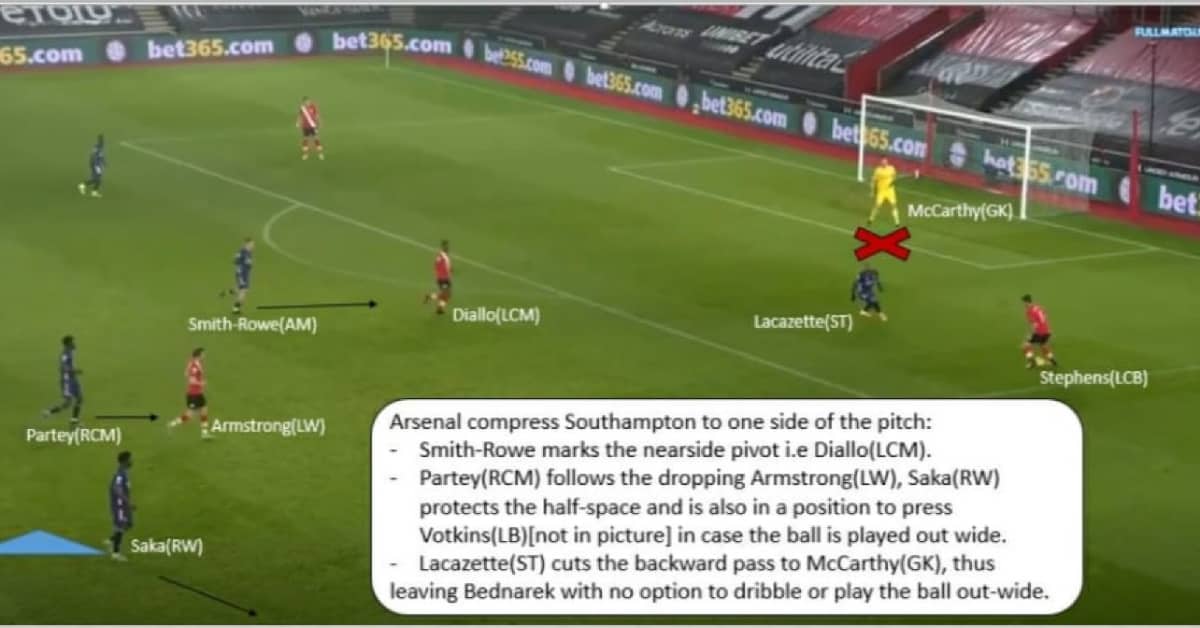
Although Arsenal still press in a 4-4-2 shape with no.10 joining the first line of press, there are some minute details that make all the difference. Often, Arteta has opted for a 4-3-1-2 asymmetrical shape in this setup with one of the wingers positioned high and narrow pressing the opposition from the outside to cut off the nearside fullback.
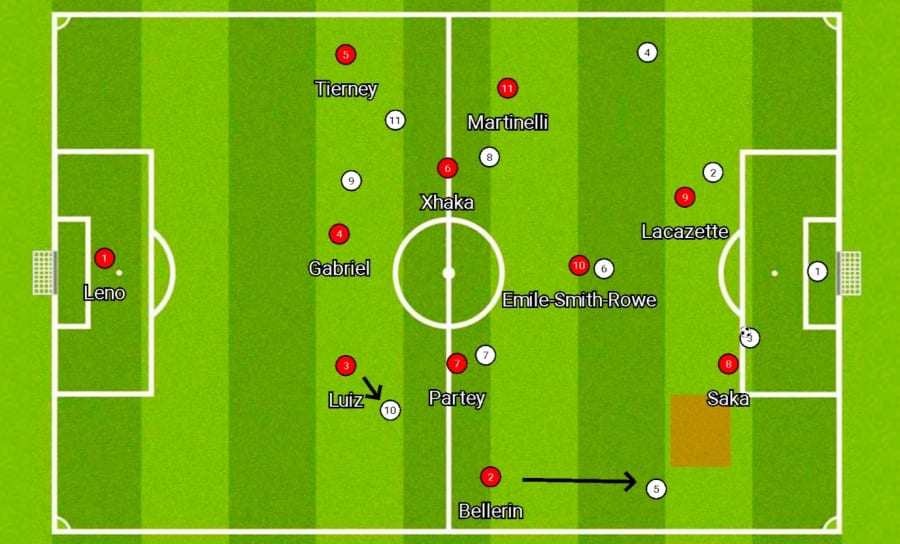
The intelligent use of cover-shadows from the front-line has allowed Arsenal to press both, aggressively as well as efficiently. This was very well manifested in their game against Southampton (A).
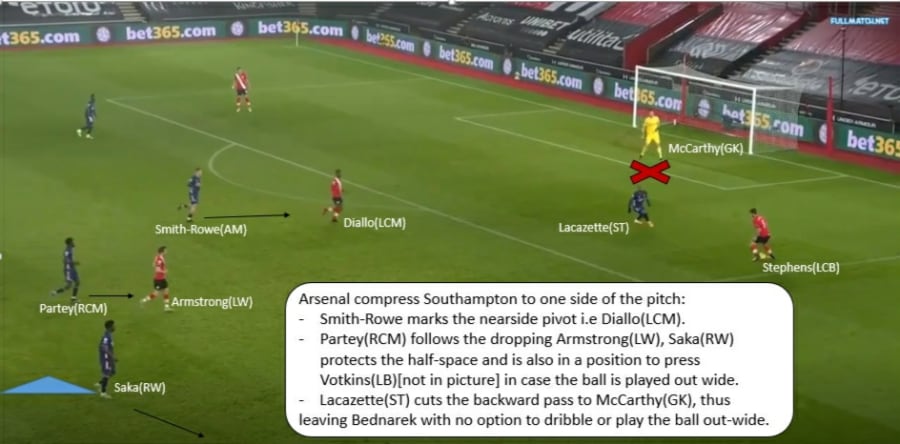
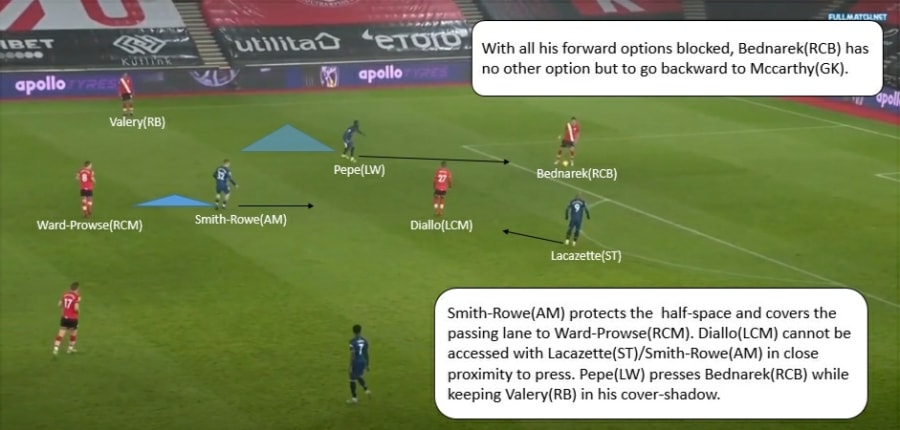
 Credit: @DomC0801
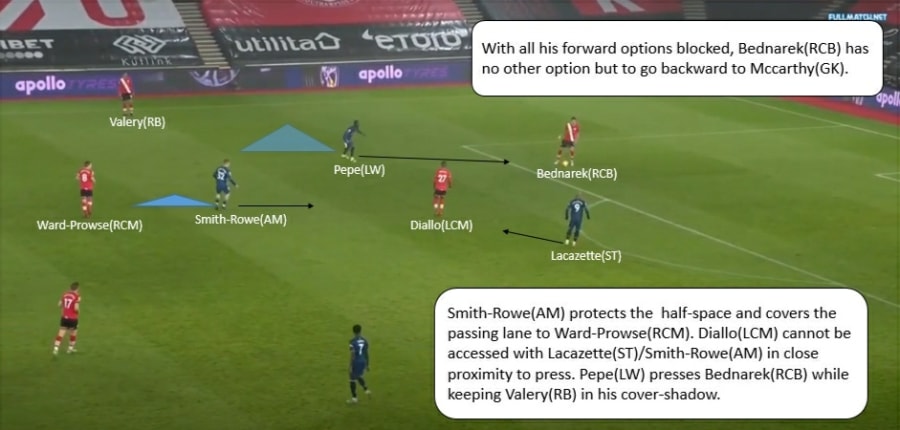
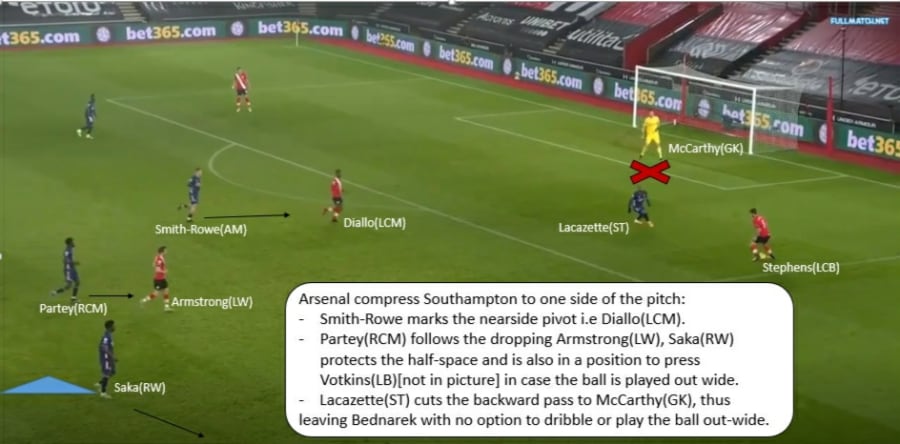
This forced a number of errors from Southampton and led to some really good chances for Arsenal. Here is another good example showcasing the same:
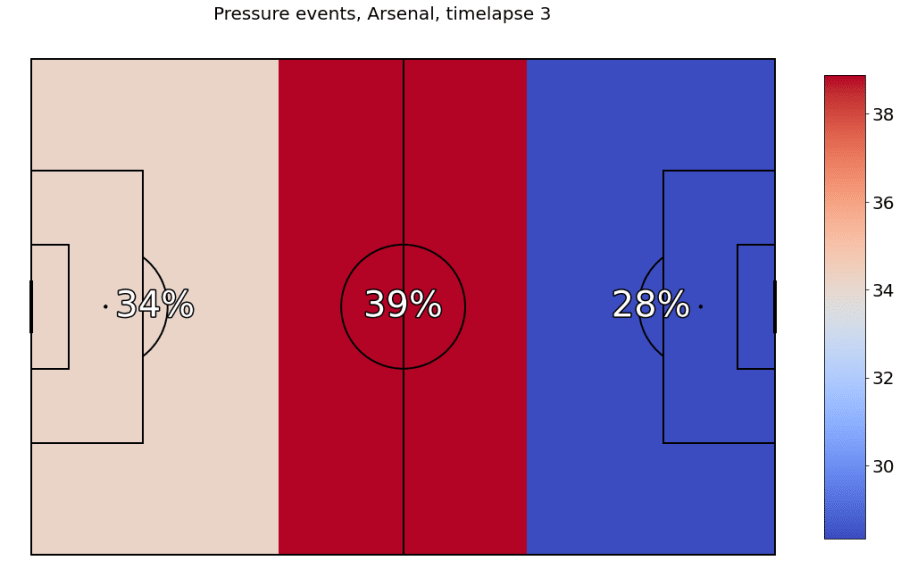
Under this scheme, Arsenal’s pressure events in the final third also seems to improve drastically as compared to the previous two ones:
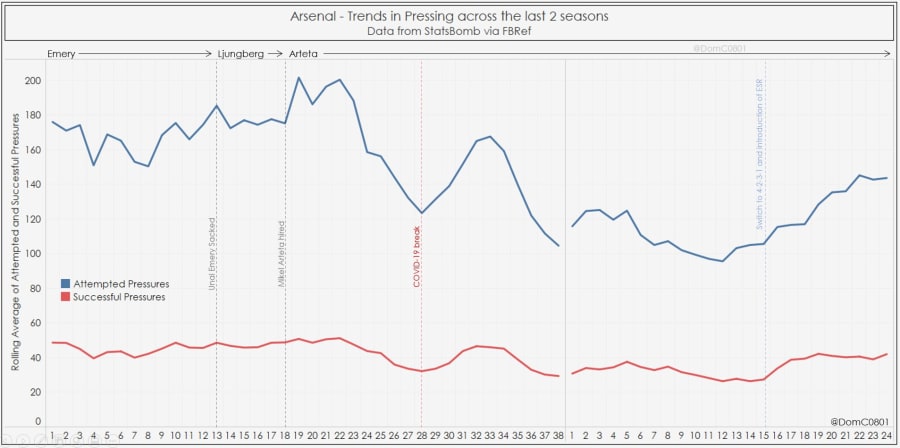
Also, the introduction of high-energy youth players (who also seem to have a good understanding of use of smart pressing[cover-shadows, etc) has been another vital factor as well.
 Credit: DomC0801
Conclusion:
After taking a detailed look at all pressing schemes implemented by Arteta so far, I think it would be safe to say that Arsenal seem to be on the right track with their current pressing system fuelled by intelligent and high-energy pressers. Another thing that I wanted to highlight through this piece was the adaptability of Mikel Arteta and him acknowledging certain weaknesses and the urgency to change things up. There are certainly many things that Arsenal and Arteta can improve upon but the following analysis shows that Arteta knows his stuff and deserves the time to bring his ideas to fruition.
BY: Shivank Batra and ElJdP