A great man once said: ‘I am going to make this the greatest club in the world’. His name was Herbert Chapman and these were his first few words after being appointed as Arsenal’s manager in 1925.
Aged 47, Chapman had established himself as one of the best managers in the game after back to back titles at Huddersfield Town. He was attracted by Arsenal’s location which meant bigger crowds and higher salary the club was willing to offer. (£2,000 yearly which was more than double of what he made at Huddersfield).
Arsenal hadn’t won a major trophy since we were founded in October 1886 as Dial Square. The club were battling relegation for the past 2 seasons and lacked the financial capability to execute a quick turnaround. It was all about good coaching.
They even made it clear in their advertisement for the Athletic newspaper that the way forward was through coaching and not simply throwing away huge sums on established super stars.
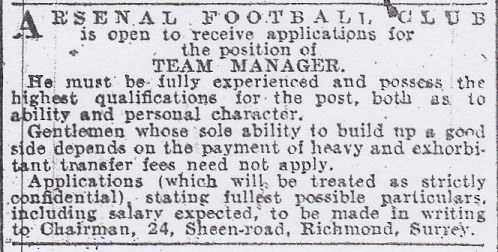
Image credit: The History of the Arsenal
That is something that has carried on at Arsenal even today. While we have seen some big money signings in recent years – We’re still a club that looks to develop talented players for the large part.
A key figure at Arsenal in 1925 was the chairman, Henry Norris who played a key role in not only tempting Chapman into joining the club, but also promising him that he would be given time to get things right.
Chapman had won back to back titles at Huddersfield and had the chance to set a record three straight titles, but opted instead to join a club that had never won in their history and were battling relegation. In the modern game, something like this is inconceivable.
With Chapman, Arsenal struck gold. In his very first season, he took the club to a second place finish which is remarkable for a side that was threatened by relegation in previous seasons. However, Chapman was of the view Arsenal needed more time to start winning and what he meant by this was sustainable winning.
This was not a ‘we will win one trophy and see we can do from there’, it was about winning and then sustaining that. He cared deeply about the long-term welfare of the club. Keeping this mind, he made a 5 year plan, parting ways with majority of the players from the previous regime and recruiting afresh based on his requirements.
In 1930, Arsenal won the FA Cup which was the club’s first ever trophy in its history and followed that up with 2 first division titles in 1931 and 1933. Chapman had turned Arsenal from relegation threatened into the richest club in world football and a powerhouse in the English division.
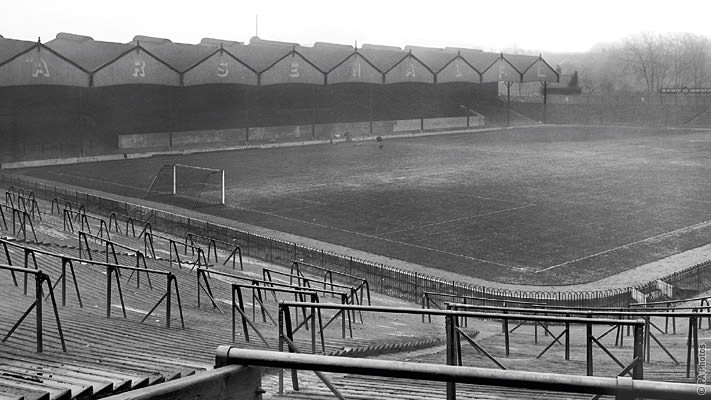 Highbury in 1931, image credit: footballparadise.com
Even before his shock death in January, 1934 due to pneumonia aged just 55 – Arsenal were 4 points clear and on course for another title.
In today’s game, a 55 year old manager coaches for at least another 7-10 years. Imagine if Chapman had that many more years at Arsenal.
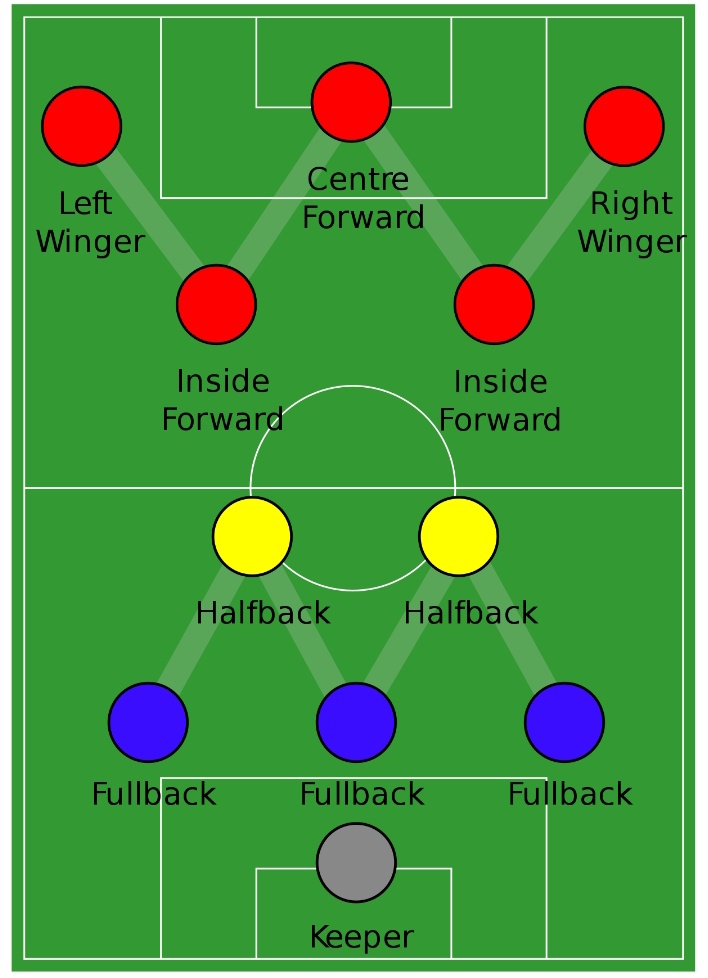
Chapman’s ideas were revolutionary. His 3-2-2-4 WM formation (as you can understand by looking at the shape of the forwards and defenders) proved very difficult to handle, as it was based on the single centre half stepping up and placing himself next to the midfield and wing backs who all shaped together in unison thus making it very hard for forwards to make runs without being caught offside. (offside laws were different at the time).
Chapman had complete control over Arsenal’s affairs when Samuel Hill-Wood became club chairman from 1927, which at the time was unheard off as in every other club – board members interfered and micromanaged every single aspect. It is amusing when you realize how the tables are once again turning in that regard with Arsenal moving from a ‘manager does it all’ to a ‘continental style’ approach with the coach focusing predominantly on game preparation with specialized roles across the hierarchy tasked with handling other matters.
Chapman was for promoting greater integration between European countries for football, with Arsenal playing friendlies with clubs neighbouring countries. At the time, this was looked down upon as a result of World War 1 with the threat of a second world war looming in the air.
Apart from this, Chapman also emphasized on the importance of maintaining high fitness levels which was unheard of back in the day. He is also the reason Arsenal have white sleeves as he was a believer that players could find each other a lot more easily. The tube station near the North Bank at Highbury was known as Gillespie Road, which Chapman changed to Arsenal in October 31, 1932. He was a man way ahead of his times.
A bronze bust of Chapman is outside the Emirates stadium. He is the man that put Arsenal on the map. Arsenal are one of the biggest teams in the world today – Even if we haven’t won a league in some years now, we are a massive institution with ‘football heritage’. This wouldn’t have been possible if not for the foundation stones laid down by Chapman close to 95 years ago. May his soul rest in peace.
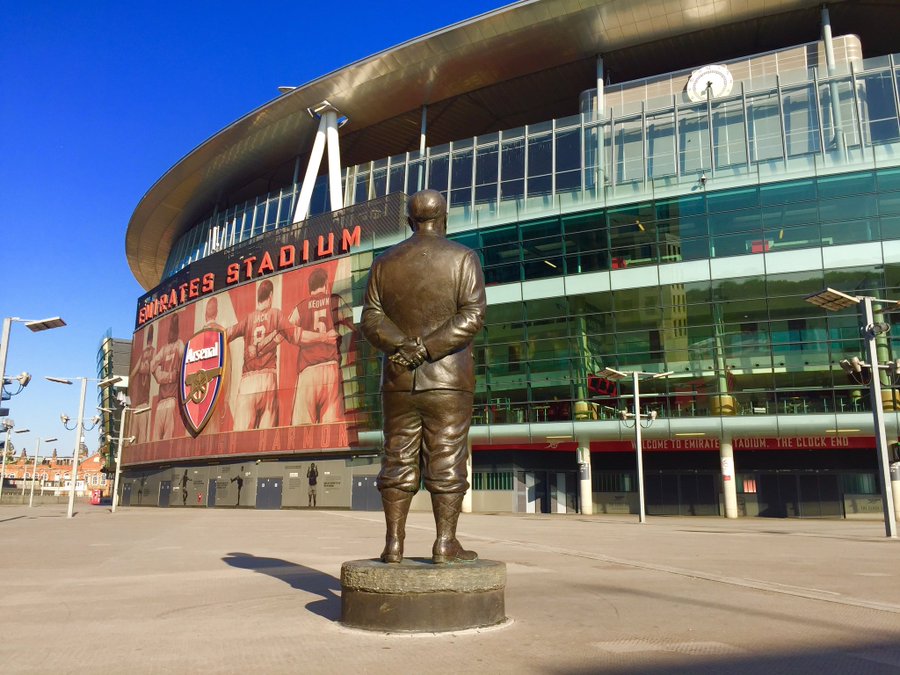
The bronze bust of Chapman outside the Emirates. Image Credit: Stuart Macfarlane