On a cold winter’s evening, I made my way to the Picturehouse in Finsbury Park. I’ve never been a movie person, but I love documentaries. And this was a documentary relating to my biggest passion in life: Arsenal FC. I simply wasn’t going to miss this.
Despite being really excited to watch this film, I kept my expectations low – I was quite underwhelmed by Wenger’s book that I read some months ago. As someone who loves following the news around the club and going into fine details, the book was hardly revealing. I should have expected that considering the classy man that Wenger is. He was never going to criticise anyone and create controversy.
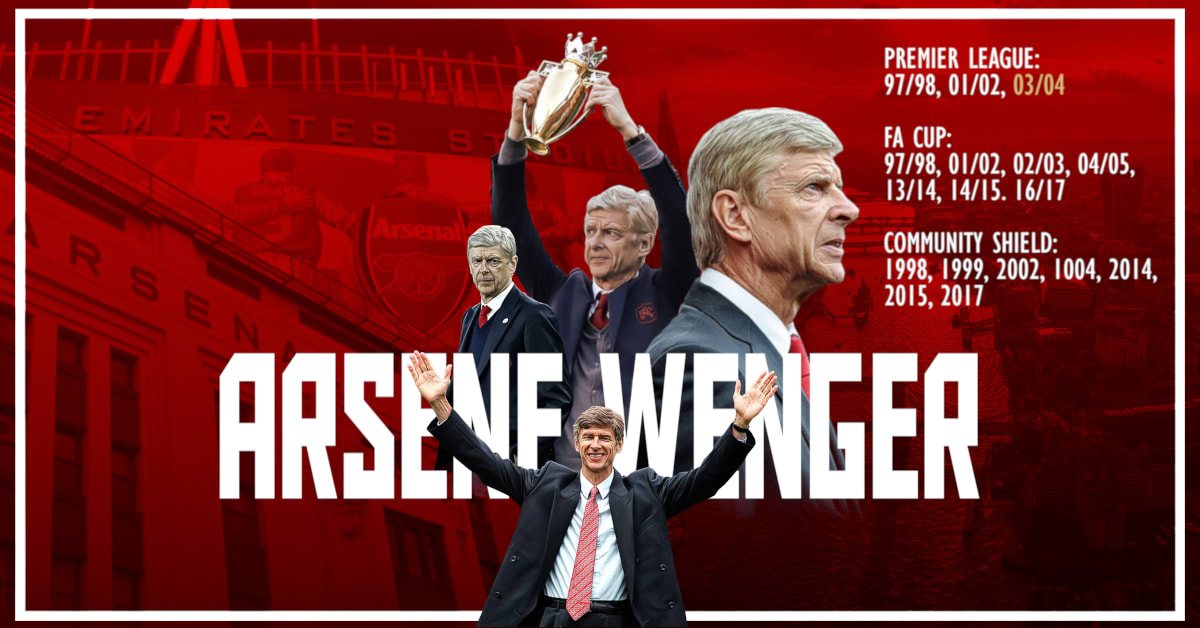
The film, though is quite different. It beautifully captures the life of the man that is Arsene Wenger – from his childhood, to how he became a coach, showing glimpses of his time with AS Monaco and Nagoya Grampus with a main focus obviously on his time with Arsenal. It encapsulates the doubts people had over him when he first walked through the marble halls of Highbury, to a beautiful journey with Arsenal culminating in an Invincibles season and eventually an end marked by fan unrest and toxicity.
Arsene Wenger was born in a French region called Alsace that features in various segments of the film – it shows you the different places in his village, with Wenger sharply recollecting them and their exact location back when he was growing up. An interesting revelation by his sister in the film was that Arsene was a keen student of the game from a young age and would do anything to achieve his goals – he was the pride of his parents. By 25, Wenger would go on to master the arts of coaching, but as he admitted in the movie, it was his education that included engineering and economics that made him complete as a manager. He was able to balance all of this, whilst also playing for Strasbourg.
In his first 10 years of management, Wenger managed to establish himself as a household name in France and Europe, after his impressive work with Nancy and Monaco. As he would later go on to admit, he left France because of the corruption in Ligue 1. Despite some of Europe’s elite calling, Wenger decided to travel to Japan and coach Nagoya Grampus Eight for the enriching experience. What is remarkable is that Nagoya finished last in the J league the season before and under Wenger, they finished runners up! The film showcases plenty of footage from Wenger’s time in Japan and the people over there really took to him.
One of the aspects that is well depicted in the film is Wenger’s relationship with David Dein. The two men had met well before Wenger’s arrival and had gone out for dinner. When Bruce Rioch got sacked in 1996, everyone was expecting Johan Cruyff to be Arsenal’s next manager. But Dein obviously had other ideas and the rest was history. Watching the film, you really absorb the journey. In today’s game, you wouldn’t really see a Ligue 1 winning manager who is wanted by the best European clubs go to Asia and then return. But more than it being a theme of the times back then, it showcased who Wenger was as a person – always seeking out different experiences to constantly improve.
It really was ‘Arsene Who’ when he first arrived. When Ian Wright was asked about the possibility of Wenger managing Arsenal, he replied with ‘Haha, who?’ It also indicated how detached the football world was back then. Today, because of social media and a plethora of websites, everyone is aware of exactly what is going on. But back then, only those who ran clubs had access to such information and Dein certainly knew what he was doing.
The film captures Wenger’s man management and this is something I loved a lot. He gave everyone freedom and space to do things and figure out solutions by themselves. He had a hands off approach and always defended his players. At the same time, he was like a father to them and provided his players with advice and help whenever they needed. Emmanuel Petit spoke about his aspect of Wenger’s management which was echoed by Patrick Vieira who claimed that the players were willing to ‘die’ for Wenger. Towards the end of the film, there was a belief that some of the players in Arsenal’s dressing room took advantage of Wenger’s politeness instead of repaying the faith.
Within a few months of Wenger’s management, fans had doubts and the English media was hostile. Rumours went around that he would be stepping down, with pictures pertaining to his private life set to be leaked. Wenger came out smiling, politely denying the news and went on with his life. He also stated in the film that things improved as the years went by, with London becoming more cosmopolitan. The initial assessment of Wenger by the fans, as stated by the man himself was that there were doubts on his management, but he signed good players, as evidenced by the recruitment of Patrick Vieira who hit the ground running straightaway.
The film skims through the first few seasons under Wenger – after the Premier league and FA Cup win in his second season, Wenger won the fanbase over, the rivalry with Manchester United more fierce than ever before. Fast forwarding to Invincibles season, with the background of Wenger’s: “We can go an entire season unbeaten” remark a year before – it showcases how everything in football was about fine margins.
Four years before the Invincibles season in 1999, Dennis Bergkamp missed a crucial penalty in an FA Cup final, with Ryan Giggs going on to score the winner as United went on to win the treble. In 2003, Ruud Van Nistelrooy missed the crunch penalty in the last minute, as Arsenal held on to a 0-0 draw with 10 men. I personally loved how this game was covered in the film. They show Wenger today watching the game on a screen, grinning with happiness after seeing Ruud’s miss. That was my favourite part of film with the entire audience laughing as well. Wenger talks about ‘fine margins’ and ‘destiny’ – this game pretty much summed it all up.
Whilst this game will go down in Arsenal folklore, the game that defined the season most according to Wenger was the home win against Liverpool. Arsenal’s season looked like crumbling, with back to back eliminations in the FA Cup and Champions league semi-finals at the hands of Manchester United and Chelsea respectively. The team was nervous at Highbury and were trailing 2-1 against Liverpool at half time. Wenger, who normally didn’t say much at half time, gave an inspiring team talk. I love this segment, as it also features comments from Henry who stated he couldn’t wait to come for the second half and do it all by himself. And as you may have seen, he goes past 5/6 Liverpool players, sends Carragher back to Liverpool’s academy and equalises. From then on, Arsenal were unstoppable and emerged 4-2 winners.
After this, Arsenal famously wrapped up the title at White Hart Lane and to be Invincible, we didn’t have to lose. On the final match day, we were 1-0 down at home to Leicester City, but the players did not know what losing meant and came back to convincingly win the match. I loved the scene where the team goes around the streets of Islington in their bus parade. I did feel sadness though, as we haven’t won the league since then!
The film then goes on to lightly touch upon the Emirates era and financial challenges that Arsenal had to endure as a club, further exacerbated with the emergence of Man City and Chelsea with FFP rules virtually non-existent. Wenger says that he regrets not leaving the club, with him rejecting multiple top European clubs like Real Madrid to stay at Arsenal and respect the rebuild. He spoke about how he identified and probably loved the club too much in the end. He says that when David Dein stepped down in 2007, that he considered leaving too, but Dein persuaded him to stay. Part of the reason was that Wenger felt responsible for the construction of the Emirates and wanted to ensure the club was able to take care of their obligations.
One thing that surprised everyone was that the film features the voices of Mr. DT and Troopz of AFTV who were both staunch proponents of the Wenger Out movement. It also shows a few of the fans’ protests and banners. Wenger goes on to admit that he did probably stay too long and speaks about how emotional he felt on the last day after 22 years of service in one club, adding that he will always be an Arsenal fan. He rates his period post the Invincibles era as his greatest achievement, finishing top 4 season in, season out to pay off the debt. He says: ‘“Highbury: my soul. The Emirates: my suffering.” Sir Alex Ferguson also features in this segment and lauds the work done by Arsenal in this period with such limited resources.
Watching the film made me think about something that I want to share with everyone – when Wenger came to Arsenal first, there was a lot of talk about how good he was tactically, always performing video analysis, changing the player’s diets to make them perform at their very best. Towards the end, he was someone who had the reputation of not caring too much about the tactics and just making this team play. It did indicate that the game had evolved a lot since he first arrived and had become a lot more tactical and technical.
As someone that wanted to move on from Wenger, I felt terrible about how some people who shared the same view as me expressed their feelings. Wanting change and expressing your view politely is fine, but to hurl abuse at someone who was so loyal and gave his every breath for Arsenal just wasn’t on.
The film showcases Wenger’s daily routine – he’d go from his house to take a run near Totteridge and then straight to the training ground and back home. He didn’t really live the London social life, in fact he hardly had any time for his daughter and family. Wenger loved the game so much that he would sometimes vomit when we lost. Many times, we came close in the Emirates era to winning the title, but ultimately came up short due to inexperience. This film not only was a depiction of Wenger’s life, it also accurately showcases the path Arsenal took as a club.
After watching the film, I walked out of the theatre with a lot of pride in being an Arsenal fan and goosebumps too! We had some great times followed by difficult times. But this club is massive, a sleeping giant and we will be back soon. Thanks for your patient reading and if you haven’t already, make sure you watch the film. It is a must watch for every Arsenal fan!
See you in the comments – interested to hear what you made of the Wenger era.