Arteta’s desire to move to a 4-3-3:
“We want to move to a 4-3-3 but for that, you need a lot of specificity in every position but now in five or six positions, we don’t have it.”
Mikel Arteta has a very clear idea as to how he wants to shape his Arsenal side. He’s been very blunt in speaking about the system he wants to move towards as evidenced by this quote from an interview he did with DAZN Spain back in November last year.
One of the players who does fit the bill in terms of this “specificity”, however, is summer signing Thomas Partey.
Unfortunately, we haven’t had the Ghanain international available for long enough this season.
Partey’s season so far – a brief overview:
We got a glimpse of Partey’s ability in the 1-0 victory away to Manchester United.
Thomas put in an all-action midfield masterclass up against the likes of Bruno Fernandes and Paul Pogba, as Arsenal recorded their first win at Old Trafford since 2006.
The very next game, Partey’s injury woes began. When Partey did return in January, you could clearly see that he needed time to return to his optimal level – he wasn’t at 100% and had to be substituted on numerous occasions around the 70th-minute mark so he could be saved for the future games.
In recent weeks, we are starting to see the best of him, even more so when he’s been played at the base of midfield.
Arteta’s 4-3-3 – how does it work?
When Arsenal needed a third goal against West Ham, Arteta made the bold call of substituting Xhaka and replacing him with Emile Smith Rowe.
In a 4-2-3-1, Xhaka and Partey typically play adjacent to each other. The one receiver in between the lines is the #10 who is either Smith Rowe or Odegaard.
The benefit of Arteta’s 4-3-3 is you have 2 attacking midfielders in front of the base midfielder resulting in 2 constant options to pick out in between the lines for Partey. Against West Ham, we had Partey at the base with Odegaard and Smith Rowe in front of him, ready to receive and create.
It is the same concept as the one Guardiola implemented at City.
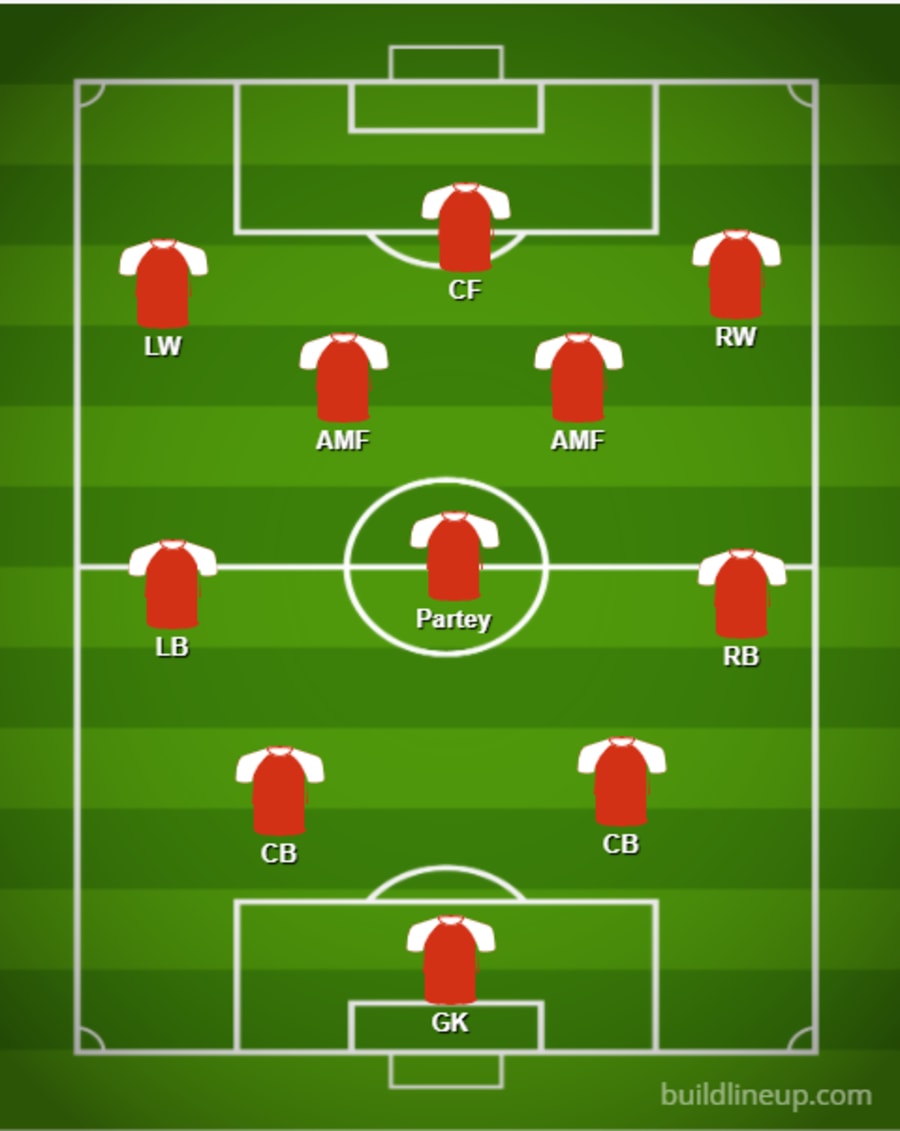
In possession, Arsenal set up in a 2-3-5 shape, with the right and left-back inverting into an auxiliary central midfield position to ensure there is adequate cover in the middle considering there is only one base midfielder in this system.
Wide players are required to maintain width throughout to compensate for the lack of overlapping full-backs. The whole idea about ‘positional play’ is to ensure you have a fixed number of players in certain zones at all times.
Now, not every 4-3-3 is the same. For example, Jurgen Klopp also utilizes this formation and is 2-3-5 in possession too. But in his case, it is the 2 full backs (Trent and Robertson) that are high up the pitch.
The midfield 3 is a straight line, with the role of the 2 midfielders on the sides being covering the space left by the full-backs, as opposed to being the main creative influence.
For the purpose of this article, when I say 4-3-3, let’s assume it is the one Pep/Mikel formulated together at Manchester City.
The importance of the #6 in the 4-3-3 and why Partey fits the bill:
When you play a 4-2-3-1 with 2 #6’s in the middle, it is a shared responsibility. A midfielder can have flaws but get away with it because he has the help of another player.
In the 4-3-3 however, there is a huge responsibility on the shoulders of the #6. He needs to constantly find players in between the lines and quickly cut off the opponents’ counter transitions all by himself. This suggests that the player who plays in this position should be of a very complete profile and not have any significant weaknesses.
Partey certainly fits the bill to play as the lone #6. Let’s take a closer look:
One of the main differentiators between Xhaka and Partey is how mobile the latter is despite his 6 ft 1in height.
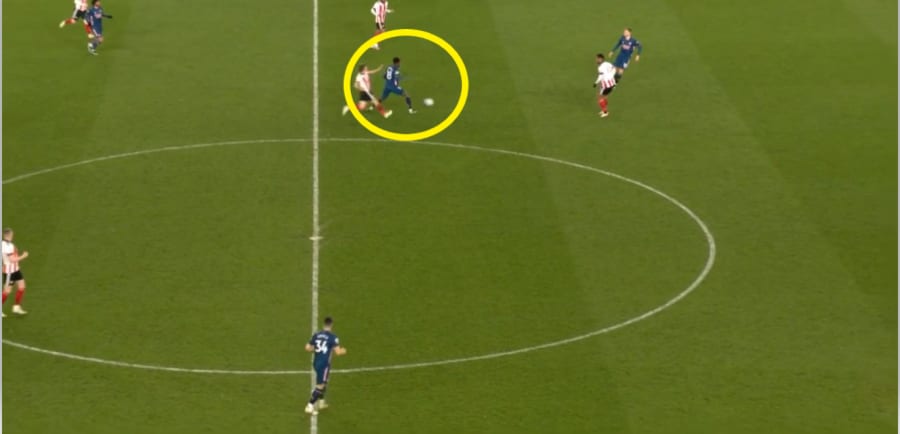
If you press Thomas Partey, you do so at your own risk. Last weekend against Sheffield United, Thomas beautifully used his body to turn away from the press and played in Lacazette with a perfectly weighted through ball. That play sums up what Partey is all about. Excellent with his feet and so direct with his passing.
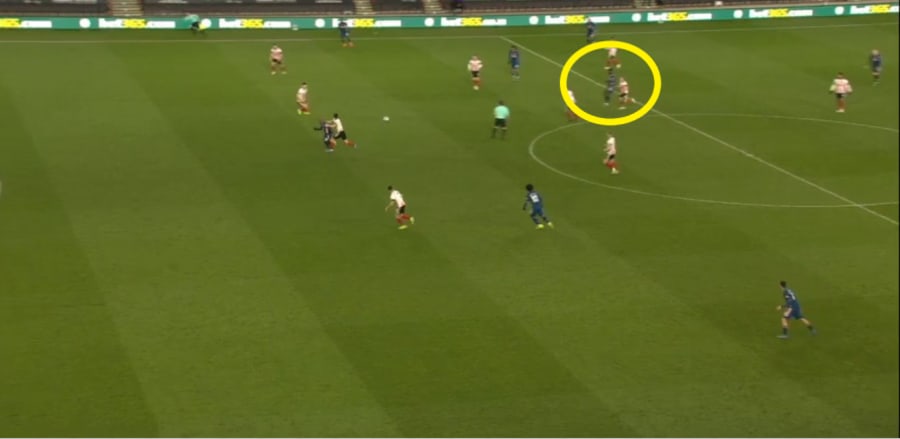
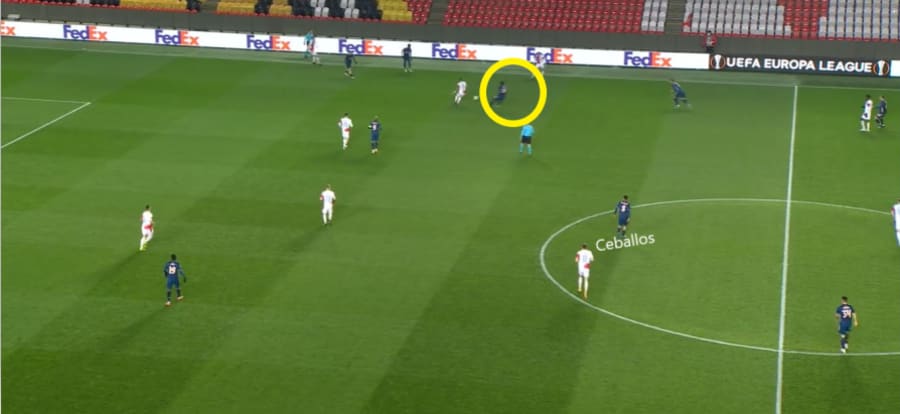
Partey isn’t someone who will simply sit. He is happy to vacate his position and press higher up the pitch. One of the interesting aspects I noticed in the victory over Slavia Prague was Partey’s desire to vacate his position from time to time and press the ball.
He is a very intense player and despite not being fit for large parts of the season, he averages close to 15 pressures a game for us this season. At Atletico Madrid, last season he averaged close to 23 per game which is immense for a player in that position.
In this scenario, Partey moves forward to press Slavia during their build-up, with Ceballos filling in at #6. Once again, this is what positional play is about. You need set numbers in each area. If one vacates, another has to cover – it is known as a rotation.
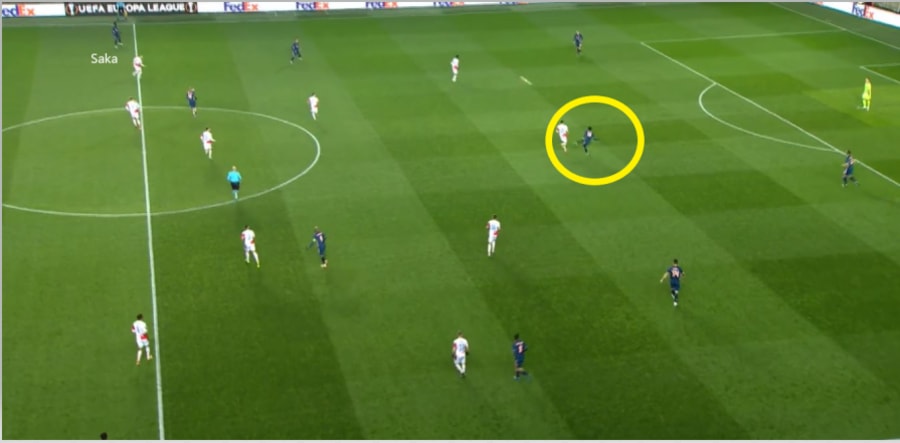
We saw Partey’s vertical passing ability against Sheffield United when he turned and picked out Lacazette. But he is also a good player to keep the ball ticking and progress the ball in other ways.
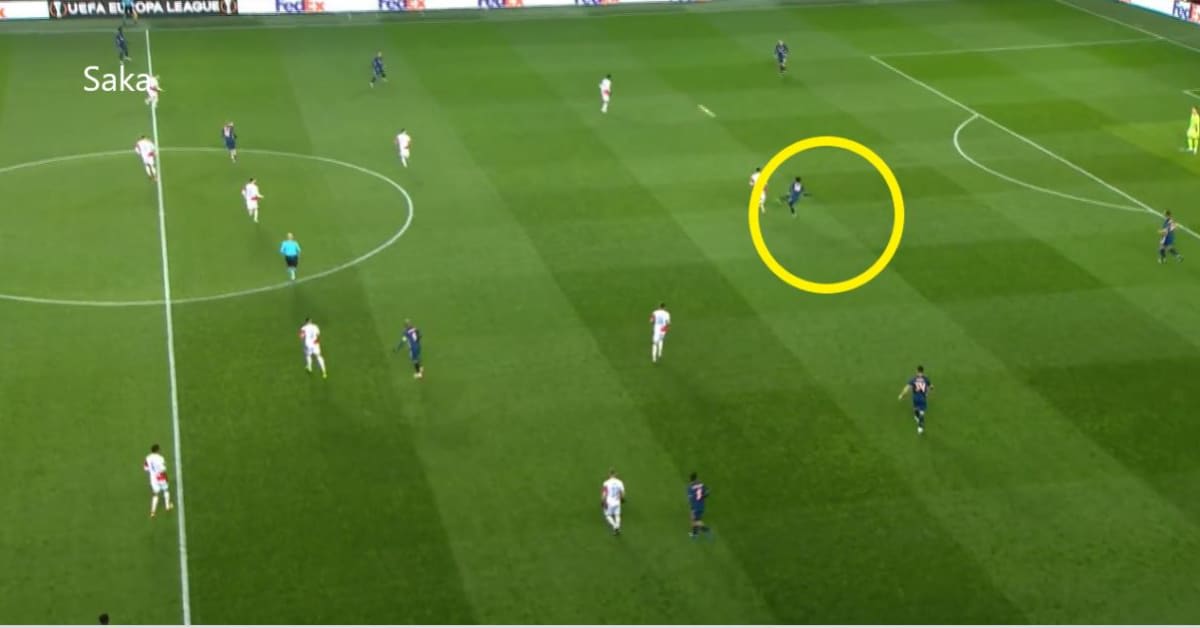
In this sequence, he receives the ball from the center half, looks up, and plays a diagonal to Saka, which is yet another effective way to progress play from deep. What I find most impressive is how perfect the weight on his passes are.
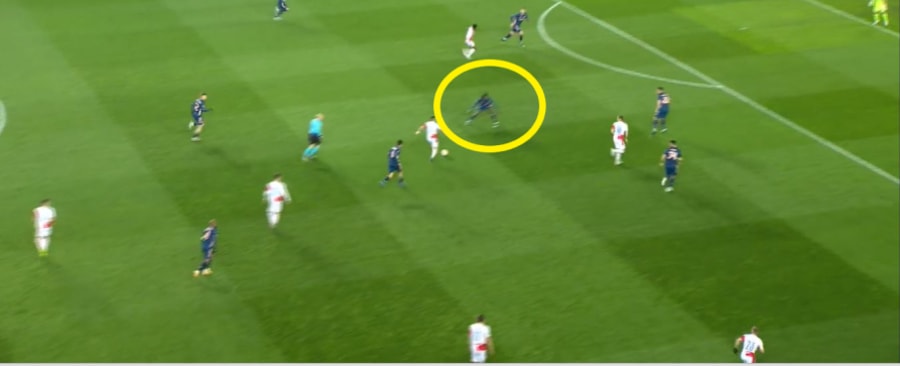
When you play as the lone defensive midfielder, you will encounter situations where you are isolated and will have to win those individual duels. If you don’t, your opponent has huge space to move into and will almost certainly create an opening.
Partey is not an easy player to get past. He was nicknamed ‘The Octopus’ during his spell with Almería due to his fantastic ability to steal balls from the feet of opponents.
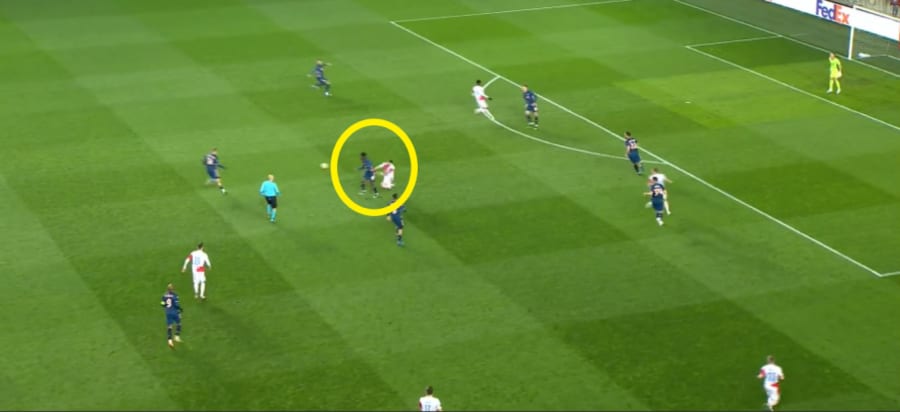
In these types of isolated situations, Partey is the player you want defending. The good thing is when you win the ball from a situation like that, you give yourself a very good chance to exploit the opposition.
In this particular interception Partey made against Slavia, Smith Rowe receives the ball and has acres of space to run into. Saka’s shot comes off the post and ESR turns it in only for it to be called offside.
On another day the goal would’ve stood and despite not registering a goal or assist, Thomas would’ve played a crucial part in it.
To sum it up:
Arsenal have a world-class player in Thomas Partey who can run the show from the base of midfield. His vertical-oriented passing style is a joy for the players who play in those pockets. He is commanding, athletic, press resistant, and defensively astute. Partey doesn’t have any significant weakness, but a couple of areas he could do better in are his shooting and the odd giveaway which stems from his desire to be direct.
Partey thrives when he has options in front of him as opposed to a partner who plays adjacent to him, which is perfect for the direction we are taking.
All in all, Partey is going to be a key player for Arsenal as Arteta moves closer to implementing his preferred 4-3-3. He is getting better and better and I’m confident we will see the best of Thomas as we enter the crucial end-of-season run-in.
Interested to hear your thoughts in the comments below. COYG!