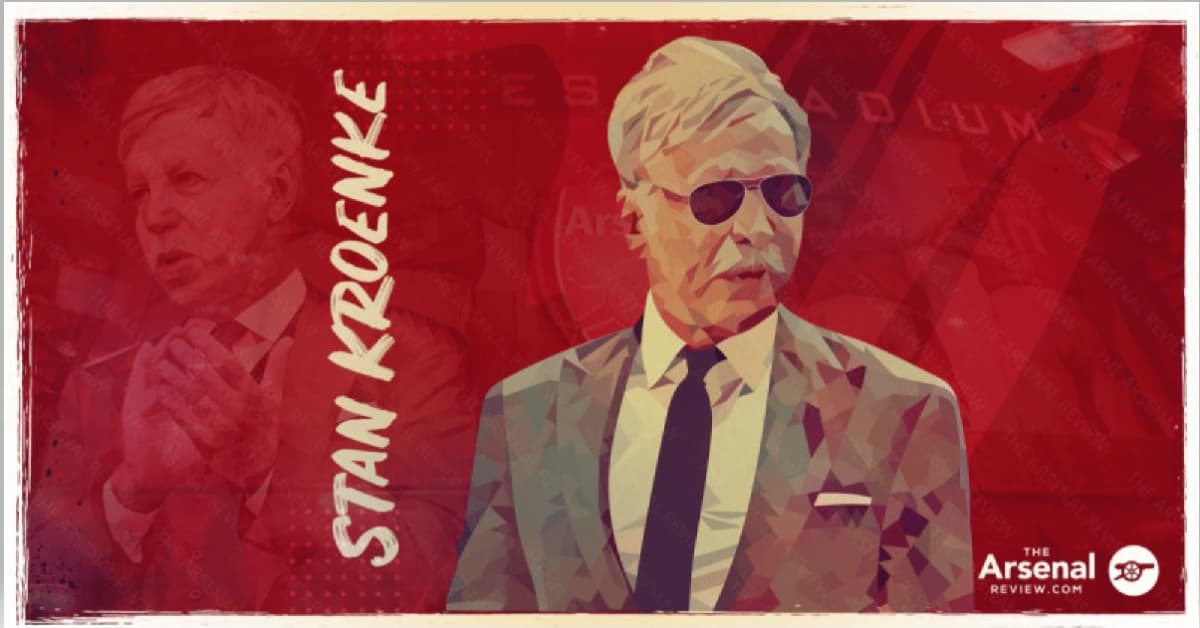
For my second blog entry, I decided to take a look at our owner, Enos Stanley Kroenke, and his firm: Kroenke Sports & Entertainment (“KSE”). He goes by many names, but for the purposes of this article, I shall simply refer to him as “Stan”. This might be like lighting the short fuse on a very big bomb in defending our much maligned owner, especially has the Kroenke ownership of the club has run concurrently with a decline in our overall performance, however it is important to look at Stan in a balanced way. Not everything he has done (or not done) has had such a detrimental impact as many supporters think.
Full disclosure: I will not be delving into detailed financial analysis (I am saving an in-depth look at the clubs finances for another time) and I will be writing in general terms, as I do not profess to know the inner workings of KSE or Arsenal FC. I am simply coming at this using my experience in my day job in corporate finance with 15+ years’ experience working with business of many shapes and sizes. I am not an accountant and nor do I wish to bore you. All sources for reference are at the bottom of the article. Finally – please do share my article on Twitter and give me a follow. I am new to this writing malarkey so your support, as a fellow Gooner, would be hugely appreciated.
Firstly, a little context…..
2007 – 2011: Minority Owner
As stated above, Stan’s ownership of the club (which he assumed full control of in 2018 after gradual increases to his shareholding since 2007) has largely run concurrently with a decline in the fortunes of the club (in terms of trophy haul and league position). However, has this decline been while others have stood still? Or could we say, with some fairness, that other clubs (our traditional and newer rivals) have accelerated in growth at the same time, fueled by billionaire takeovers (Man City, Leicester) and corporate financiers (Manchester United, Liverpool) which has exacerbated the fall from grace? I think so. However, why has this happened and is this Stan’s fault?
In 1997, the Arsenal Board looked into moving the club to a new stadium, as Highbury (the hallowed ground) was deemed as too restrictive in terms of growing matchday, sponsorship and TV revenues to compete with our UK and European rivals. TV money was growing at an accelerated rate and the Champions League continued to grow in stature, size, and wealth.
Fast forward to 2006 and the Emirates Stadium was born, at an approx. cost of £390m. This doesn’t seem a lot of money today, but even back then the idea a football club could self-finance such an investment was impressive to say the least. To do so would require a substantial mortgage, which the club duly took out and thus followed a lengthy period of “living within our means” with the master, Arsene Wenger, at the helm.
One of Wengers specialisms was taking a relatively unknown talent (usually from France) at very low cost and converting him into a supreme footballer. Wenger believed that unearthing real quality need not cost a king’s ransom – so he was emboldened by the idea of working within tight restrictions, especially as the clubs revenues would surely increase with the stadium move, so the period of austerity would/should be short-lived.
During this time not only did we create some truly memorable squads laden with absolute world-class players, but we also knew how to convert them into cash when a “bigger club” came calling. We became a “selling club” much to supporter’s frustrations (ironic as this is one of the most frequently used criticisms of the club today; that we are not a good “selling club”). However, this was necessary to ensure the financial performance of the club was maintained while the Emirates mortgage was being serviced.
In addition, at this time, interest rates were much higher than they are today and “development financing” (funding used to build a property) often costs a lot more than “investment property” funding (mortgaging a property that covers debt service costs from rental income).
While all this was going on, our rivals had no such financial obligations and pressed ahead investing their own resources into their squads, inflating transfer fees and challenging for honors. To be frank, the fact Arsenal remained a Champions League club for so long on a shoe-string budget was miraculous. However – even then we rarely made any meaningful progress into the latter stages, getting to roughly the same point and crashing out, as our European rivals were also diverting funds into players rather than stadiums (by and large).
Up until 2011, Stan was a minority owner and had little say over how the club was run or financed, holding approx. 30% shareholding. The Arsenal Board backed/hid behind Wenger as the absolute omnipresence in the dressing room, board room and press center and we held our own for many, many years. Importantly, our financial performance continued to improve concurrently to the rising tides of the Premier League and Champions League. Our rivals financial strength was vastly superior to ours and this reflected in the lack of trophies we accrued. Wenger was not joking when he considered 4th spot a trophy in its own right, such consistency was as impressive as winning the trinket itself. So, on a business level, if it aint broke, don’t fix it.
2011+: Majority Owner
One important decision that was taken, around 2012, was to invest the clubs Hale End Academy, seen as a credible source of talent not only for the first team squad, but also from loans or player sales. Ivan Gazidis lead the charge but I will never devote a blog to that man, so for the sake of balance I will say no more about him. During the 2011-2018 period, Stan increased his shareholding and engaged in a battle of wits/wallets with Alisher Usmanov (another Russian billionaire).
Over the period, Stan obviously won out and by 2018, his full ownership was assumed. Alisher Usmanov wanted to take control and invest big money into the team to drive serious challenge in the pitch – luckily we avoided this (see below re debt financing). Being such a big Arsenal fan, Usmanov promptly jumped in his fiesta and drove up to Everton to become part owner with Farhad Moshiri. However, also during this period the clubs on-pitch performances continued to decline and by 2017, we were no longer a Top 4 side. From 2018 onwards we slipped into the second tier of European Competition in the Europa League. Why was this? Because in short, we operated a self-financing model as we continued to service the Emirates Stadium debt. We bought stop-gap signings, cheap singings, promoted youth and “got by” when and how we could.
At the same time, the likes of Manchester United, Chelsea, Manchester City and Liverpool FC continued to attract the cream of talent from the UK and Europe. The Emirates Stadium and our self-financing model were great for business (short and long term) but millstones for our stock in trade as a football club. Finally, given the “quality” of player we had on our books, our prowess as a selling club also slipped and income from sales declined accordingly.
Of the notable talents we did sign (like Alexis Sanchez, Mesut Ozil as key examples) we did so with big salaries and bonuses which proved to be a double-edged sword: keeping the talent but then becoming held to ransom by them in terms of their attitude on/off the pitch as well as being unable to offload them when it suited the club (and not the player).
Financing: Why Doesn’t Stan Invest?
The short answer is; we do not know that he has not. Stan is not exactly going to appear on Arsenal Fan TV and proclaim he has wired £50m to the club to sign Thomas Partey; this was assumed by the media, speculating such an outlay could have only come from KSE. Also there many ways to invest in a club without transferring money to the Arsenal current account.
In the Arsenal Holdings Limited financial accounts for the 12 months to 31/05/2020, a note on the last page confirms the Emirates Stadium “mortgage” (aka Bonds and Interest Rate Swap) was refinanced into a new loan provided by KSE UK Inc. (a subsidiary of KSE). Why do this? One would refinance a loan to improve its terms; such as interest rate charged, reduce capital repayments, extend the loans term (thus lower the debt repayments) or you refinance and borrow more to leverage the Stadium “asset” to invest more debt financing. Essentially, Stan used the resources and arrangements available in KSE to ease the clubs debt burden, which (importantly) improves the clubs cash flow.
Side note: cash flow refers to the difference between actual cash income and cash expenses. For example, after you are paid your salary from your day job, you obviously have expenses (such as mobile phone bill, rent/mortgage, groceries etc) which you have to pay to live. Whatever remains is your cash flow: if you dip into your overdraft, this is negative cash flow. If you end up with a surplus by next payday, this is positive cash flow.
By potentially amending the terms of the Emirates Stadium debt, Stan helped boost the clubs cash flow and its spending power in terms of transfer fees and/or funding for player contract obligations. Also, by moving a debt “off balance sheet” (from Arsenal Holdings Limited to KSE) you improve the overall net worth of the business and its return on investment – improving its credit rating and therefore the terms of any further borrowing or insurance premiums.
Moreover, Stan may have also borrowed more money against the Emirates Stadium (I don’t know he did, I am running with a guess to make the following point) which he would have either invested in KSE’s other franchises or improve the cash flow of KSE itself – which would, in-turn, benefit Arsenal if any additional funding is needed (aka Thomas Partey). Remember, KSE owns Arsenal FC, so if any period of “financial stress” were to occur, KSE would be on hand to assist and shore-up the football clubs finances, a safety net if you will.
Why doesn’t Stan just wire the club £500m to buy new players? Because this would be debt on the balance sheet of the club that would require repayment – therefore negatively impacting cash flow. Yes, we could buy some nice shiny new players, but then we would have the added expenses of player contracts on top of those the club are already financing from its own resources. By artificially increasing the clubs cash flow, beyond the means the club itself can support, you enter a downward spiral of needing more owner investment to support on an ongoing basis. Once you get on the train, it’s hard to get off.
Stan is worth approx. $8.bn (Forbes, 2021) but this comprises the value of his entire holdings, it is not cash. In real terms, he probably has a fraction of this as liquid funds he can move about at will, the rest comprises real estate ventures, shareholdings in other sports teams, investment portfolios, and commercial/residential property portfolios. etc. Stan made his money in property and he thus treats Arsenal as a real estate venture: buy a valuable asset, improve its market value and generate a good yield (return on investment).
Stan was right when he proclaimed you do not own a sports team to win trophies (wildly paraphrasing here) as the odds of success are tiny. No sensible businessman/women would consider this a sensible strategy in and of itself. Unless you are an oil nation state (cough*ManchesterCityandSheikhMansour*cough) and such continual investment is mere pocket change. The more debt you pile in chasing trophies, the more stress you put on the club if you fail. Ultimately, the prize money available winning the Premier League and/or Champions League is dwarfed by the clubs transfer spending and these cups become expensive trinkets indeed.
Decision Making: Distant Stan just do nothing?
Stan is happy to let the Arsenal Board run the club. That is the ideal scenario. What we do not want is an owner who runs out and buys (what he deems) a quality player and forces the manager to play him (cough*Chelsea*cough). This is disruptive and counterproductive, as well as disrespectful to the playing staff. What does Stan know about soccer (shudder) that he could tell Wenger, Emery and now Arteta? Nothing. He might know a thing or two about Baseball or Lacrosse, but not football (that’s better). So we don’t want him involved in the sports-side of the club. You don’t become a billionaire by being a poor businessman – he can take care of the commercial aspect and leave the playing staff to focus on the football.
However, what about ambition? Where is the accountability? Shouldn’t Stan sack an underperforming manager and get someone new in? As per my last blog post, who do you get in? The likes of Massimiliano Allegri, Jose Mourinho, Diego Simeone, Carlo Ancelotti, Antonio Conte and Thomas Tuchel all have at least two things in common: (1) they are expensive and (2) they would demand assurances over sizable transfer budgets for quick-fix signings for quick-fix success (to protect their egos and reputations as serial winners). The former we should not be forced to pay (remember cash flow) and with regards the latter: we have never done that, and are certainly not in a position to achieve that if it happened.
When Wenger left, we got Emery – and that turned out great. Stan met a Spanish dude who said the right things (via an interpreter) but it was ultimately the Arsenal Board who hired him. It was the same with Arteta. The Arsenal Board make the pitch to Stan, present the pros and cons and he simply “rubber stamps” the decision they have made. Over and above that (like most owners to be fair), he is only concerned about the finances and the value of his assets. However, if his move of the St Lois Rams to the LA Rams tells you anything, Stan can be ruthless when needed.
Communication: Silent Stan just say nothing
Stan, AKA “Silent Stan”, famously doesn’t say anything about anything, he takes the Queen’s approach: “never complain, never explain”, and why would you? If you became the owner of Arsenal FC, would you go to the media and explain your decision-making? Where you get your financing from? What your current and future plans are? No you wouldn’t. You leave the communication up to the real decision-makers, the Arsenal Board. The reason Stan keeps is counsel on an array of matters is that he knows he is not qualified to say anything about football related matters. Stan’s approach, as above, is to let the Arsenal Board run Arsenal – he simply rubber stamps their decisions as the owner/financier and leaves them to it.
What about Josh?
Josh Kroenke (just Josh from now on) is the heir apparent to the KSE Empire and has already taken on major roles from Daddy Kroenke as part of wider arrangements concerning their US-based sports franchises. Josh has largely been absent from the spotlight, but over the last 18 months (covid-19 restrictions noted) he has increased his presence in interviews and an Arsenal Fan Forum from a few months ago. Largely driven by the (moronic) decision to countenance entry to the European Super League (ESL) and its severe backlash, Josh has taken a more front-and-center approach and I suspect this will continue, as he has realized UK sports fans aren’t as passive as he thought. To illustrate how little the Kroenke’s know about football – you can point to the ESL decision and Josh’s comment in the aftermath of the fan backlash:
“English fans want to see more big matches, but you still want your cold nights in Stoke.”
This, for me, illustrates in a nutshell, that the Kroenke’s do not understand football or football fans. That is OK by me. I do not need them to understand either. Don’t be mistaken, if you think the Glazers at Manchester United, Sheikh Mansour at Manchester City or John Henry at Liverpool know more or understand the game better – you would be wrong. Apart from a passive interest in the sport (largely to be photographed at their respective Stadiums on match day), they know money and how to make it, not football and how to kick one.
The Future
We can safely assume we will see more of Josh in the future. I think the Kroenke’s have woken up and realized how important Arsenal is to their KSE Empire and it is time the club took an upward trajectory in performance on the pitch. I will look to cover this in a future article, however I think the club rebuild under Arteta will work, the current transfer window (at time of writing on the 19/08/2021) is looking promising and the investment in Hale End is bearing solidly talented fruit. Whether you like or dislike Stan, he has overseen this (from afar) and allowed the Arsenal Board and manager to get on with it. I do not think we will see any further funding support of the level we (allegedly) saw for Thomas Partey, but I certainly expect the clubs continually strengthening financial performance to be reflected in squad development and, crucially, our league table position improvement. We will have to wait and see.
Summary
So what is the conclusion from my rambling essay? As you (should) have read, I am not Stan’s friend or supporter. I have taken a general and balanced view to ascertain if Stan is really the architect of our decline. He is not. Arsenal FC’s fall has been due to the financial constrains placed on ourselves by the Stadium move and our self-financing model – set against the rise in super-rich owners happy to invest vast sums chasing trophies.
I promise you – this is not sustainable. I refer you to Barcelona FC and Real Madrid as classic examples of financial hubris.
In the past, we have seen confused and incoherent decision-making by the Arsenal Board but the slimmed down version that exists today will bring about more stability and forward-thinking strategy. Stan should not be involved in day-to-day decision-making, but be assured if the value of Arsenal FC declined by even a $1, he will be there to correct the problem.
Stan should not be involved in player transfers, only to rubber-stamp the Arsenal Boards’ decision. Stan should not pump millions into the club, as this is debt, which would strangle the future financial performance of the club and, thus, any chance of growing and improving on the field as we hope to do. Stan should remain quiet and let the Arsenal Board communicate with the supporter base – as they know the club and understand football. So long as Stan knows his place, we will be fine as a football club.
The real issues that have affected us are being fixed with Arteta and Edu, as they should be, and I foresee a bright future for this club, its young manager, and squad. Enos Stanley Kroenke should remain a benign owner in the background and let the football people run the football club.
Sources: