

After years of defensive deficiencies at Arsenal, it is the attack under Mikel Arteta that is currently stifling the club’s progression.
Against Crystal Palace, Arteta set his side up in a 4-3-3 as he sought to squeeze in his attacking players.
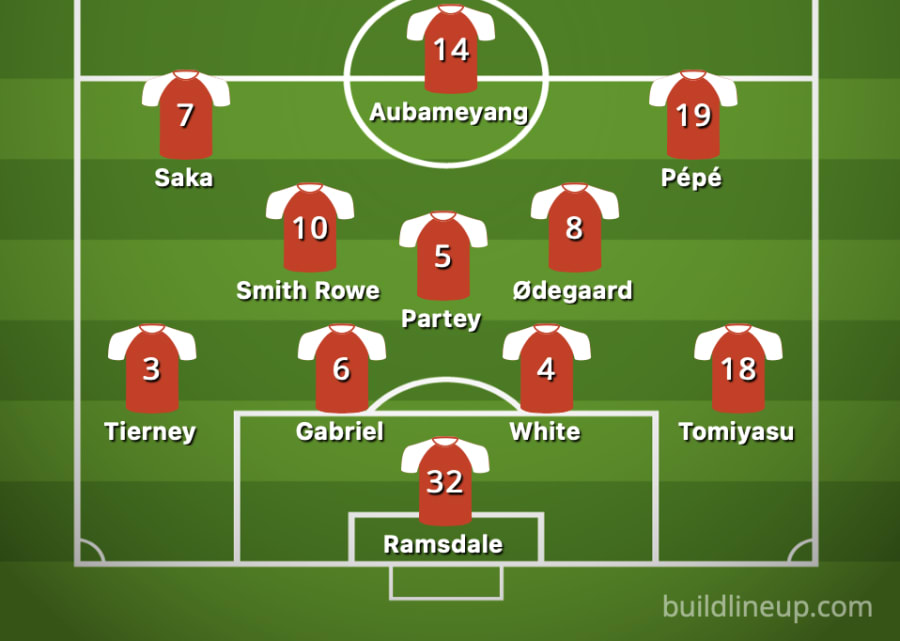
Given that the fanbase have been crying out for more exciting attacking football, it is difficult to criticise the manager for his team selection against Palace.
To Arteta’s credit, for the opening 15 minutes it worked. Arsenal were bright and on the front foot, culminating in an early goal. Nicolas Pépé and Takehiro Tomiyasu worked some space with a one-two during the second phase of a corner before Pépé’s fierce curler was parried out for Pierre-Emerick Aubameyang to volley in from a tight angle.
But as the half went on, Arsenal dropped off and gave Palace control of the game. With that the Gunners’ attacking threat withered away.
Arsenal typically have two ways of fashioning chances: a flowing team goal of one and two touch play starting from the defence, or an individual moment of magic.
Arteta’s side are good enough to produce these free flowing team moves fairly frequently, as we saw against Tottenham in the North London Derby. There are also enough creative flair players to have multiple moments of individual magic per game. These methods are too complicated and are not dependable for creating high quality chances when Arsenal need a goal.
In terms of goal scorers, the Gunners have a lack of reliable options, often relying solely on Aubameyang for regular production in front of goal. He has 3 goals in 6 Premier League starts, and when the team is struggling as much as they are, keeping him firing is vital.
So how can Arsenal improve their goal threat?
When Arsenal score, particularly early on in games, they cannot afford to hand the initiative to their opponents like they did on Monday night.
The Premier League is host to many dangerous teams and when you give them a lot of the ball and some confidence, they will punish you as Crystal Palace did.
Arteta showed his awareness of the issue in his post-match press conference: “I think we put the handbrake on a little bit. We started to defend something. We were not moving fluently enough and taking the right decisions, playing forward more and being more ambitious to score the second goal in that moment.”
However, during Arsenal’s regression against Palace, there were two noticeable positives about the Gunners off the ball: the shape and Aubameyang’s effort.
Without the ball, Arsenal defended in a 4-4-2, pushing Emile Smith Rowe up next to Aubameyang and having Martin Ødegaard drop in next to Thomas Partey.
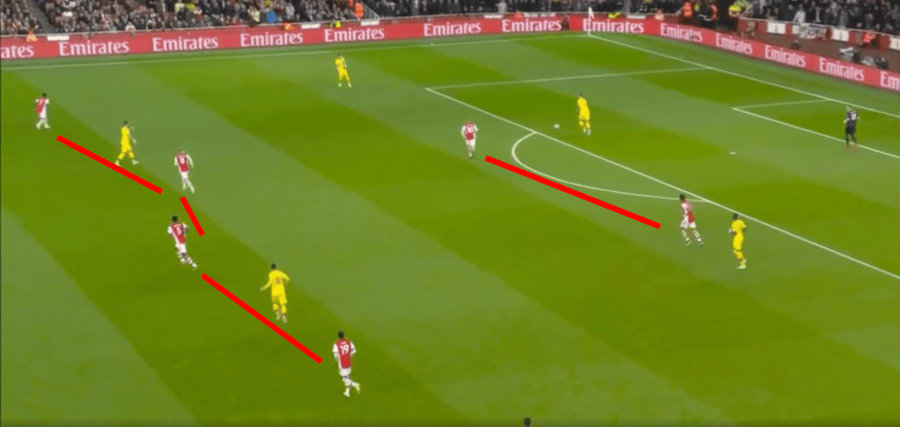
This helped to put pressure on the Eagles’ defence and midfield, often forcing them to play the ball long. Arsenal did have some success at winning the ball back with this shape too, overwhelming the Palace midfielders as soon as the ball reached their feet.
Within this shape, we also saw Aubameyang working to close people down, something we have not seen in a long while.
In the 31st minute there was a passage of play where Aubameyang burst into life, chasing down Luka Milivojević and then Jordan Ayew, forcing a mistake and winning the ball back for Arsenal.
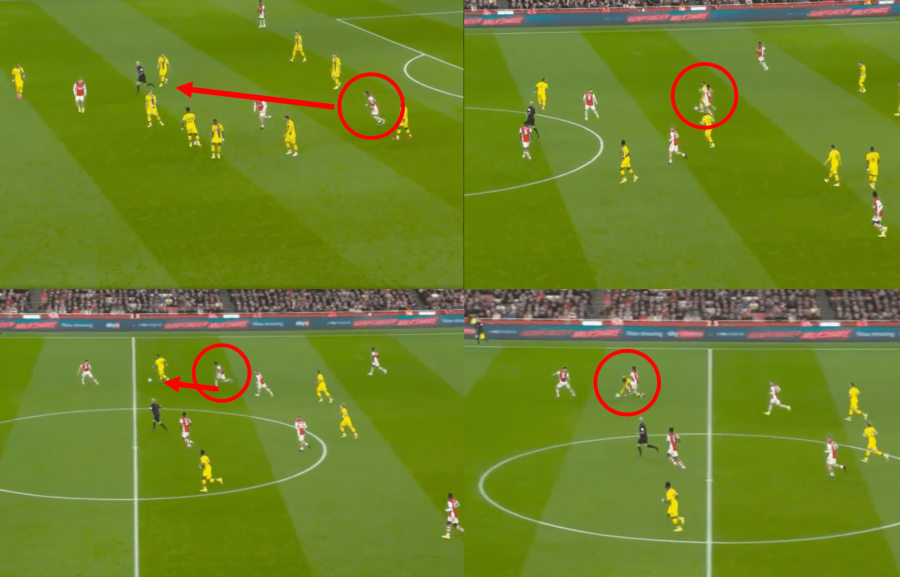
There has always appeared to be a correlation between Aubameyang’s supporting cast and his desire to press. Playing with Willian and Pépé last season saw the Arsenal skipper sauntering around and looking disinterested when his team did not have the ball. Alongside Smith Rowe and Saka he often looks more lively, almost as if he does not want to be outshone by the youngsters.
Perhaps this was a factor in his improved performance off the ball, or perhaps having a second player to back up his press closely gives him more hope that his team can actually win the ball back rather than chasing down aimlessly on his own.
Arsenal can press far better than they did against Crystal Palace, but the shape at least worked.
With the 4-4-2 working off the ball, should be explored on the ball?
Of course it is not as simple as that, and the shape naturally changes in both attack and defence from the original team sheet, but the 4-4-2 could be the way to reignite an old partnership.
Alexandre Lacazette played just 23 minutes against Palace and his passion was evident throughout his cameo. A passion that was infectious.
Despite Albert Sambi Lokonga’s mistake leading to Palace’s 2nd goal, Arsenal sprung to life upon the arrival of Lacazette, and it was the Frenchman who ultimately scored the equaliser to send the Emirates into a frenzy.
In 23 minutes, Lacazette had 3 shots (joint highest), 2 shots or target (highest) and 3 key passes (highest). Arguably Arsenal’s two best players against Crystal Palace were Aubameyang and Lacazette.
In the previous game against Brighton, Arsenal once again became flat, failing to fashion chances and unable to make the ball stick up front. Once Lacazette entered the pitch, Arsenal created a 1 on 1 for Smith Rowe thanks to a smart layoff from the Frenchman.
Lacazette has less than one year on his deal, and it is likely he will leave the club once his contract runs out, but for now he is an Arsenal player – and a valuable one.
Playing Aubameyang and Lacazette together in the past has often seen the former pushed out to the left wing, but their chemistry on the pitch is undeniable.
In their brief stint together on Monday night we got a reminder of their connection.
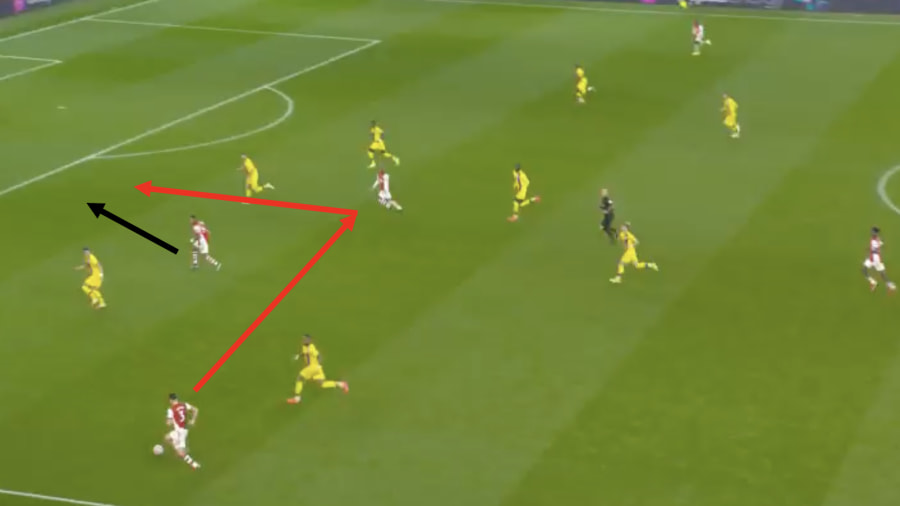
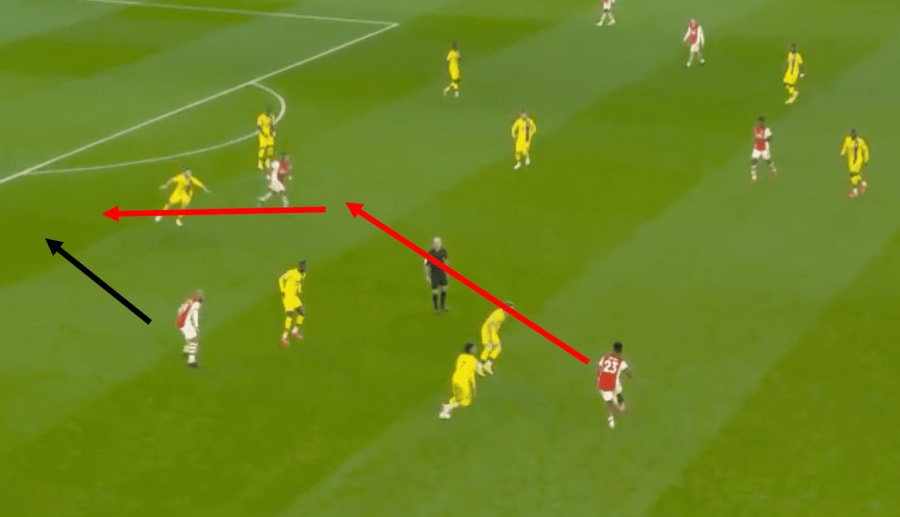
In this attack, Kieran Tierney is carrying the ball down the left. Lacazette drops off the front line gesturing that he wants the pass, whilst Aubameyang begins running in behind to receive a first time ball from his strike partner.
5 minutes later we saw the reverse of the attack above, this time creating a good opportunity for Lacazette. Aubameyang drops off to receive a pass from Lokonga whilst Lacazette begins to run in behind.
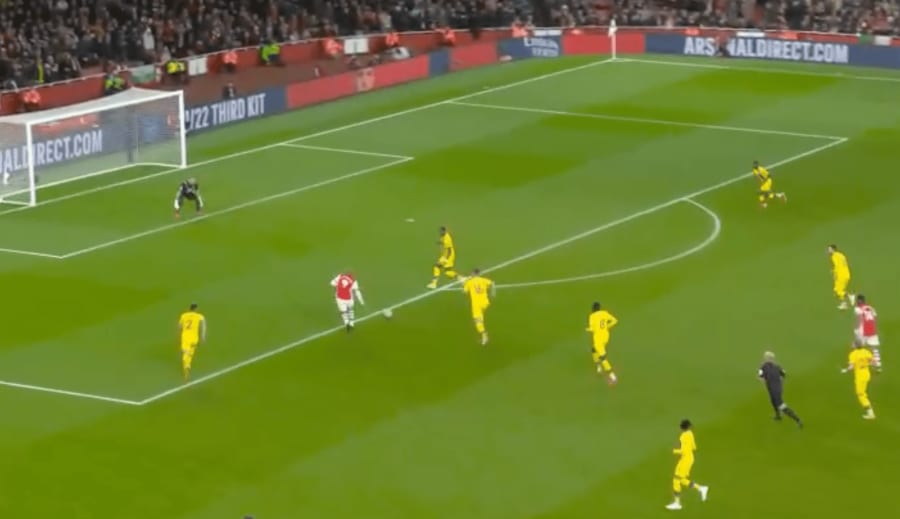
Aubameyang finds his teammate with an excellent reverse pass, setting Lacazette up for a good opportunity on the edge of the box.
The plays are simple but effective, and with the rigidness of Arsenal’s attack and the struggles scoring goals, getting an extra striker on the pitch and creating chances off of simple forward play would help Arsenal be more dangerous.
In general, build up play Arteta can retain the 3-2-5 shape with Lacazette offering a focal point through the middle, allowing Aubameyang greater freedom in the box.
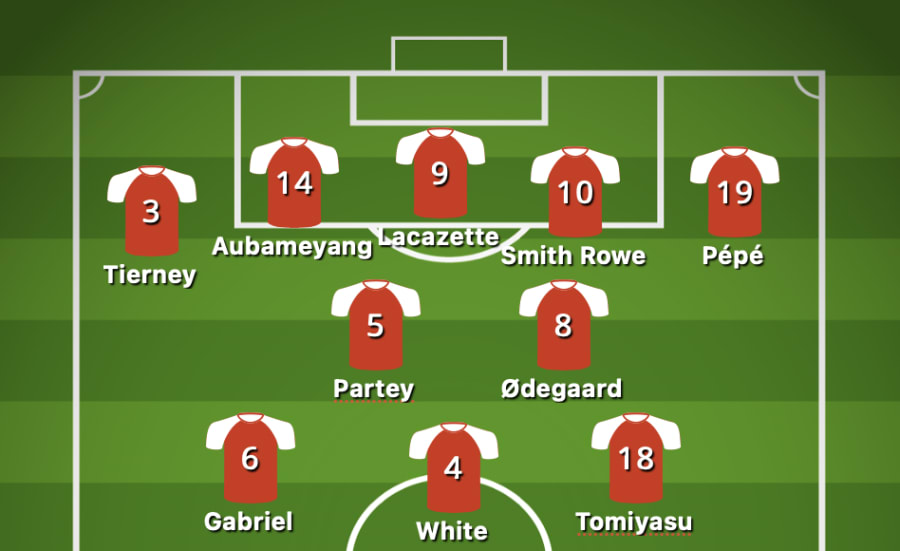
On the ball, Arsenal have options. Lacazette could drop into a quasi-number 10 rope as he did at points last season, Aubameyang could drift out to the left wing and Smith Rowe could float around to create overloads all over the pitch.
With Saka a doubt for the Aston Villa game, Arteta should deploy a 4-4-2 with Aubameyang and Lacazette up top, Pépé and Smith Rowe wide, and Ødegaard next to Partey in the middle. There is also the option for Lokonga or Ainsley Maitland-Niles instead of Ødegaard should Arteta want more stability.
Arsenal’s attack will get better as the season goes on – if only because it cannot get much worse. The progression of Saka, Smith Rowe and Ødegaard will naturally improve Arsenal’s goal threat, but Arteta cannot afford to wait for them to save him once again. He has to find a more immediate solution.
The 4-4-2 offers one way of improving Arsenal’s attacking play, and a way of involving Lacazette alongside Aubameyang. Arteta has to try something – or his job will be on the line.


